Last Updated: November 16, 2026
Quick Summary
Sealed canvas wall art with a protective varnish or laminate can handle a humid bathroom if it is placed away from direct steam and the room is well ventilated. Metal and acrylic prints are the more durable choice for rooms that see regular steam, while unsealed canvas is best kept for drier spaces.
- Unsealed cotton or polyester canvas absorbs moisture, which can cause sagging, edge curling and ink fading.
- Sealed canvas with varnish or laminate resists moisture far better than unsealed versions.
- Keep prints out of the splash zone around showers and tubs, and avoid spots where water can run down the wall.
- Run the exhaust fan during and after showers to draw moisture out faster.
- Inspect edges and the wall mount every few months to catch early signs of humidity damage.
Want art that suits your bathroom?Vireous.Shop makes made-to-order canvas and framed prints for personal spaces.
Shop Bathroom Canvas Art
Table of Contents
Why Bathroom Humidity Is Hard on Wall Art
Bathroom walls take more abuse than almost any other room in the home. Steam from showers and baths raises moisture levels quickly, and that moisture can soften paper, warp wooden frames and lift adhesives over time. For canvas wall art, the risk is less about one steamy shower and more about repeated cycles of damp air followed by drying, which is where many prints start to show problems.
Before choosing a print, it helps to understand what the room is doing to it. Humidity rises during and after bathing, then falls as the room ventilates, so the artwork experiences swings rather than a steady condition. Materials that handle a single damp day may still struggle when that cycle repeats for years.
We built this guide to help you judge which canvas constructions and finishes suit a humid bathroom and which ones are better kept for drier rooms. It covers materials, placement and care, so you can shortlist options with confidence rather than guessing.
Canvas is a popular choice for home decor because it is lightweight and familiar. In a humid bathroom, though, the backing material and the protective coating matter more than the image itself. An untreated cotton or polyester canvas can absorb moisture and sag, while a sealed or laminated surface resists it far better.
To judge which format suits a humid room, compare them on moisture resistance, appearance, maintenance and cost. The table below summarizes how each behaves under damp conditions.
| Format |
Moisture Resistance |
Appearance |
Maintenance |
Relative Cost |
| Unsealed canvas |
Low, cotton or polyester absorbs moisture, leading to sagging, edge curling, and ink fading |
Soft, matte texture; visible weave |
Dust with dry cloth; avoid moisture |
Lowest |
| Sealed canvas (varnish or laminate) |
Moderate to high, coating repels water and reduces ink fading |
Similar to unsealed but with slight sheen; laminate can look plastic |
Wipe with damp cloth; inspect edges |
Moderate |
| Framed print with glazing |
Moderate, glazing shields from splashes, but frame wood can warp and trapped moisture can condense behind glass |
Classic, polished look |
Clean glass; check frame for swelling |
Moderate to high |
| Acrylic print |
High, sealed acrylic surface is waterproof and resists fading |
Glossy, vivid color; can show fingerprints |
Wipe with acrylic cleaner |
High |
| Metal print |
High, dye sublimation into coated aluminum creates a water-resistant, rigid surface |
Glossy or matte; can show wall imperfections |
Wipe with damp cloth |
High |
Canvas (pros): Light, soft and easy to hang. Works well in a powder room that sees occasional steam, especially when a protective coating is applied.
Canvas (cons): Cotton-based canvas absorbs moisture. Repeated humidity can cause edges to loosen or the image to dull. Even sealed canvas can degrade if moisture penetrates edges or backing.
Metal (pros): The surface resists water and wipes clean easily. Suits rooms with direct steam exposure.
Metal (cons): Reflective finishes show wall imperfections, and the prints are heavier to mount.
Acrylic (pros): Sealed and durable, with strong color saturation.
Acrylic (cons): Heavier and higher in price, so it is a larger commitment for a bathroom wall.
Framed prints (pros): Glazing shields the artwork from splashes.
Framed prints (cons): Wooden frames can swell, and trapped moisture behind glass can cause condensation. You can also see a framed print option to compare the framed format against canvas in a humid room.
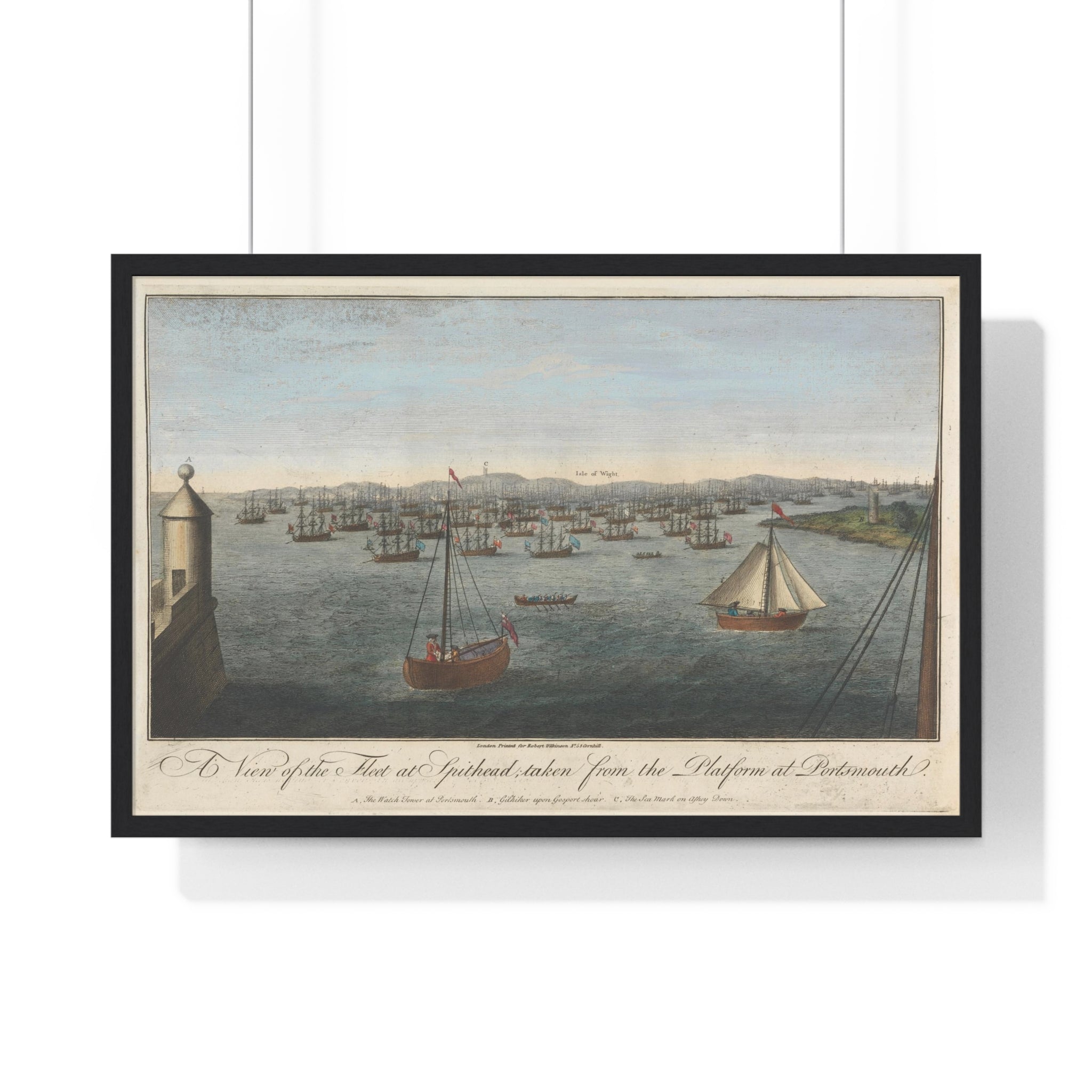 A View of the Fleet at Spithead, Taken from Stone Common near Exbury Distant Upwards of Three Leagues, from the Original, Framed Art Print
When comparing products, look for explicit statements about the coating type, the backing material, and fade resistance.
Best Prints for Bathroom Walls: Materials and Finishes That Resist Moisture
The finish you choose often decides how well a print survives a humid room. Ask the seller directly whether the surface has a water-resistant or humidity-resistant finish, and what that finish is made from.
Pay attention to a few specific features when comparing options:
-
Protective coating: A varnish or laminate layer helps repel moisture and reduces fading.
-
Sealed or stretched edges: Well-stretched canvas holds its shape longer than loosely mounted material.
-
Backing: A moisture-resistant backing limits how much humidity reaches the artwork.
-
Fade resistance: Bathrooms often receive indirect daylight, so fade-resistant inks help preserve color over time.
Bathroom Wall Art for High Humidity: Placement, Distance From Steam and Ventilation
Where you hang a print matters as much as what it is made from. A piece placed directly opposite a shower will face constant condensation, while one mounted on a drier wall away from the water source will age far more slowly. Think about the room's layout before choosing the spot.
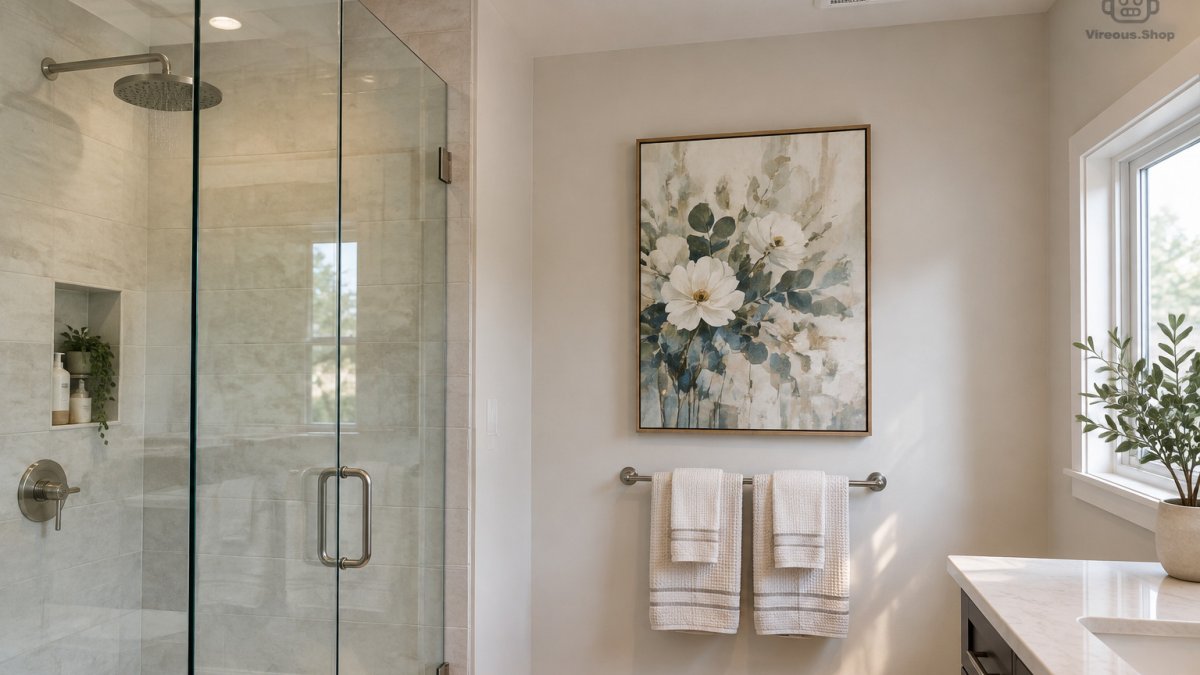 Framed canvas wall art hung in a ventilated bathroom away from the shower area
Humidity exposure generally falls into two broad categories: occasional steam and persistent dampness. The placement strategy differs for each.
For occasional steam, keep these principles in mind:
- Hang art on a wall that does not face the shower or bath directly.
- Leave at least a few feet of distance between the print and the shower enclosure to limit steam contact.
- Use a working exhaust fan during and after bathing to draw moisture out.
- Avoid hanging art above a radiator or heating vent, where heat dries and stresses the material.
For persistent dampness, stronger measures are needed:
- Choose a wall farthest from the shower or tub, ideally on an interior wall rather than an exterior wall prone to condensation.
- Ensure the exhaust fan is suited to the room's size and runs long enough to clear steam.
- Consider a dehumidifier if the room stays damp; artwork is not a remedy for poor ventilation or leaks.
- Mount the art with a small air gap behind it (using standoff hardware or a French cleat) to allow airflow and prevent moisture trapping against the wall.
Ventilation does most of the work. Running the fan for a while after each shower brings humidity down faster, which reduces the time artwork spends in damp air. If condensation regularly forms on mirrors or windows, the room is too humid for any canvas without added ventilation.
Keeping Canvas Away From Showers and Tubs
Canvas and steam are a poor match at close range. Keep prints out of the splash zone around showers and tubs, and avoid positioning them where water can run down the wall. Even well-coated canvas benefits from distance, since droplets and direct steam gradually weaken adhesives and edges.
If your bathroom is small and every wall is close to water, consider a powder room or a shelf display in a drier spot instead. A thoughtful placement often protects the art better than any coating alone.
Bathroom Canvas Art Ideas That Suit Humid Spaces
Choosing a subject for a bathroom is partly about looks and partly about how the image sits in a room that runs warm and damp. Soft, calm imagery tends to suit bathrooms well, since the space is already full of light reflections and textures.
Consider these styles:
-
Botanical and nature scenes: Leaves, ferns and coastal views feel fresh and suit a spa-inspired look.
-
Neutral line art and ink illustrations: These work well in small rooms and blend with white or stone finishes.
-
Soft landscapes: A calm scene, such as a misty field or quiet water, brings a restful mood to the room.
-
Vintage-inspired prints: Muted tones and classic compositions pair nicely with traditional bathroom fixtures.
A useful rule is to choose a print whose colors echo the tiles, towels or fixtures. That keeps the room feeling cohesive without making the artwork compete with the space.
Caring for Canvas Art in a Humid Bathroom
Even a well-chosen print needs basic care in a damp room. Wipe it gently with a soft, dry cloth when dust or fine moisture builds up, and avoid harsh cleaners that can damage coatings. Check the piece periodically for loose edges, warping or discoloration, which are early signs that humidity is getting through.
Simple habits help a lot:
- Run the exhaust fan during and after showers.
- Wipe down condensation near the print when you notice it.
- Inspect the edges and wall mount every few months.
- Rotate or move the piece if one side shows more wear than the other.
These steps cost little and can extend the life of the print considerably.
Choosing Your Bathroom Art and Getting Started With Vireous.Shop
Choosing wall art for a humid bathroom comes down to three things: the material and coating, the placement, and the care you give it afterward. Canvas with a protective finish can work well in a powder room or a bathroom with good ventilation, while metal or acrylic is the safer bet for rooms that see regular steam.
At Vireous.Shop, we offer a creative marketplace for unique wall art, framed prints and personalized apparel. Browse our collection to find a piece that fits your space and style, and get started with Vireous.Shop today.
Frequently Asked Questions
Can canvas prints withstand bathroom humidity?
Canvas can handle the moisture of a typical bathroom if it has a protective finish and is not placed where it takes direct steam or spray. Standard unsealed canvas can soften, wrinkle or fade over time in a humid room, so keep the print away from the shower and tub. Good airflow from a bathroom exhaust fan also helps the print stay dry between showers, which matters more than the canvas itself for long-term condition.
Are framed prints better than canvas in a bathroom?
Canvas, however, has no glass to fog or crack, and it is lighter and simpler to hang. In a humid bathroom, the better choice depends on placement: a framed print is safer near a shower, while canvas works well on a wall that stays a few feet from the water source.
What is the best canvas wall art for a humid bathroom?
Subjects such as coastal scenes, botanical art, line art and calm spa-inspired neutrals suit most bathrooms. Ask whether the seller describes the finish and how it resists moisture, and compare the coating details rather than relying on the image alone.
How can I protect canvas art from moisture?
Keep the print out of direct steam and spray, hang it on a wall away from the shower and tub, and run the exhaust fan during and after bathing to lower humidity. Dust the surface gently with a dry cloth rather than wet cleaning, and check the back and edges periodically for softness or staining.