

Table of Contents
- Custom Merch for Vloggers: Why 2026 Is Your Best Opportunity
- Best Print-on-Demand Sites for Influencers
- Vlogger Merch Design Ideas That Drive Sales
- Influencer Merchandise Marketing Strategies That Convert
- Print-on-Demand vs. Pre-Stocked Inventory: What Works for Vloggers
- Designing Your Brand Identity Through Custom Apparel
- Common Mistakes to Avoid When Launching Vlogger Merch
- Conclusion: Launch Your Merch Store in 2026
Last Updated: August 9, 2026
Custom Merch for Vloggers: Why 2026 Is Your Best Opportunity
The creator economy has fundamentally shifted. Where vloggers once relied solely on ad revenue and sponsorships, custom merchandise now represents one of the most reliable income streams available. The difference between a thriving creator and one struggling to monetize isn't always about audience size anymore, it's about diversifying revenue through branded products that fans actually want to buy.
At Vireous.Shop, we've seen firsthand how vloggers are using AI-powered design tools and print-on-demand fulfillment to launch merch lines in days instead of months. The barrier to entry has collapsed. You no longer need inventory capital, manufacturing connections, or design expertise. What matters now is understanding which platforms fit your audience size, design aesthetic, and profit margin expectations.
This guide covers the best print-on-demand sites for influencers, design strategies that convert, and the marketing tactics that turn casual viewers into merch customers. Whether you're launching your first drop or scaling an existing store, you'll find actionable frameworks here that address the specific pain points vloggers face in 2026.
Best Print-on-Demand Sites for Influencers
The print-on-demand landscape has consolidated around a few dominant players, each with distinct strengths. The choice depends on three factors: integration with your existing platforms, product variety, and profit margin structure. Most vloggers overlook the margin question, they focus on ease of use and forget that a 15% profit margin on $20 items doesn't scale the same way a 40% margin does.
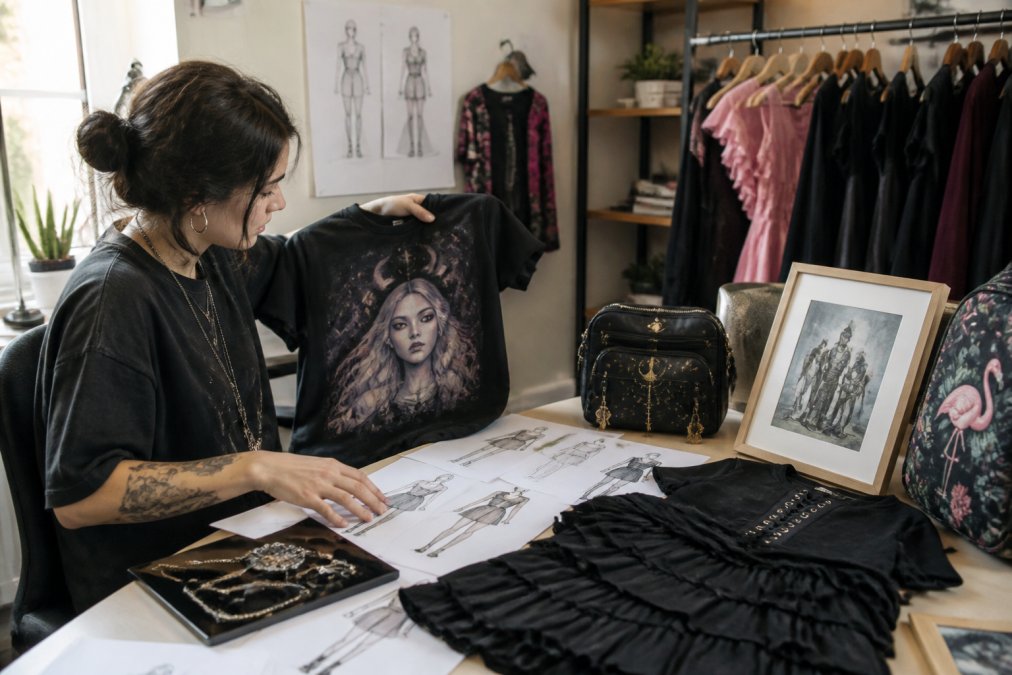
Vireous.Shop: AI-Powered Design & Same-Day Dispatch
Vireous.Shop stands apart because it combines AI-generated design capability with same-day or next-day fulfillment. Using OpenAI and DALL-E 3 integration, you describe what you want in natural language and the platform generates unique designs instantly. No design skills required. No waiting weeks for mockups.
The speed advantage matters more than most creators realize. Limited-edition drops work because of scarcity and urgency. If your production takes two weeks, the urgency evaporates. Same-day dispatch means you can announce a design on Monday, ship by Tuesday, and close the drop by Wednesday. That velocity converts impulse buyers into actual customers.
The product range includes custom apparel, canvas art, framed prints, and personalized home decor. The Money Back Guarantee removes purchase friction, if the quality doesn't match the preview, you get your money back. For vloggers building brand trust with a new audience, that guarantee becomes a selling point worth mentioning in your video.

The tradeoff: Vireous.Shop's per-item pricing sits higher than pure print-on-demand competitors. You're paying for the AI design integration and the speed. If your audience is price-sensitive, this matters. If your audience values exclusivity and fast drops, the premium pricing becomes irrelevant.
Fourthwall: All-in-One Creator Commerce
Fourthwall positions itself as the YouTube-native solution. It integrates directly with the YouTube Product Shelf, meaning your merch appears in your channel header without requiring viewers to click away. That frictionless discovery converts significantly higher than external store links.
The platform handles manufacturing, taxes, and customer support entirely. You design, upload, and Fourthwall manages the rest. For vloggers who want to focus on content and avoid backend logistics, this is the path of least resistance.
Pricing uses a revenue-share model on digital products and memberships, you keep the majority of sales. Physical merch uses a per-item fee structure, similar to other POD platforms. The real advantage is the bundling: you can sell digital courses, memberships, and physical products all in one storefront without juggling multiple platforms.
The limitation: organic traffic. Fourthwall doesn't drive discovery like a marketplace would. Your audience needs to know your store exists. You're relying entirely on your channel, social media, and external promotion. For established vloggers with engaged audiences, this is fine. For newer creators, the lack of organic traffic is a real constraint.
Printful & Printify: Extensive Product Catalogs
Printful offers over 200 customizable products. Printify goes further with 900+ items, including niche options like custom shoes and pet accessories. Both integrate seamlessly with Shopify, WooCommerce, and Etsy.
The advantage: product depth. If you want to offer custom hoodies, t-shirts, hats, socks, underwear, phone cases, mugs, posters, and canvas prints all in one store, these platforms deliver. The integration ecosystem is mature, you're not fighting with the platform, you're automating it.
Pricing is per-item fees deducted from your sale price. Margins vary by product. A $25 t-shirt might net you $8-10 profit depending on the print method. A $50 hoodie might net you $15-18. The math is transparent but requires calculation.
The friction point: these platforms require you to run your own e-commerce store. You need Shopify or WooCommerce. You handle customer service. You manage returns. You're building a real business, not just launching a branded product. For vloggers ready to invest in infrastructure, this is powerful. For creators wanting simplicity, it's overkill.
Spring: YouTube-Native Merch Integration
Spring (formerly Teespring) was built specifically for creators. The YouTube integration is native, your merch appears in the Product Shelf without external setup. The platform handles everything: design feedback, production, shipping, customer support.
Setup is genuinely fast. You can launch a merch line in under an hour. The design tools are beginner-friendly. The platform provides templates that work for most use cases.
The tradeoff is profit margins. Spring takes a larger cut than some competitors. Your $25 t-shirt might net you $5-7 profit after their fees. If you're selling high volume (1000+ units per drop), the margin compounds into real money. If you're selling 50 units, the margin barely covers the effort.
Spring works best for established vloggers with large, engaged audiences. If you have 500K+ subscribers and can move inventory quickly, the ease of use justifies the lower margins. For creators, margin flexibility gives you more breathing room.
| Platform | Best For | Setup Time | Profit Model | YouTube Integration |
|---|---|---|---|---|
| Vireous.Shop | AI-designed, fast drops | <1 hour | Per-item fee | Manual links |
| Fourthwall | Hands-off operations | 1-2 hours | Revenue share (digital) | Native shelf |
| Printful | Product variety | 2-3 hours | Per-item fee | Manual links |
| Printify | Niche products | 2-3 hours | Per-item fee | Manual links |
| Spring | Quick launches | <1 hour | Revenue share | Native shelf |
Vlogger Merch Design Ideas That Drive Sales
The difference between a merch drop that sells 10 units and one that sells 1,000 isn't always design quality, it's relevance. Your audience buys merch for one of three reasons: they want to display their fandom, they want a functional item your brand is associated with, or they want something exclusive they can't get elsewhere. Design ideas should target one of these motivations explicitly.
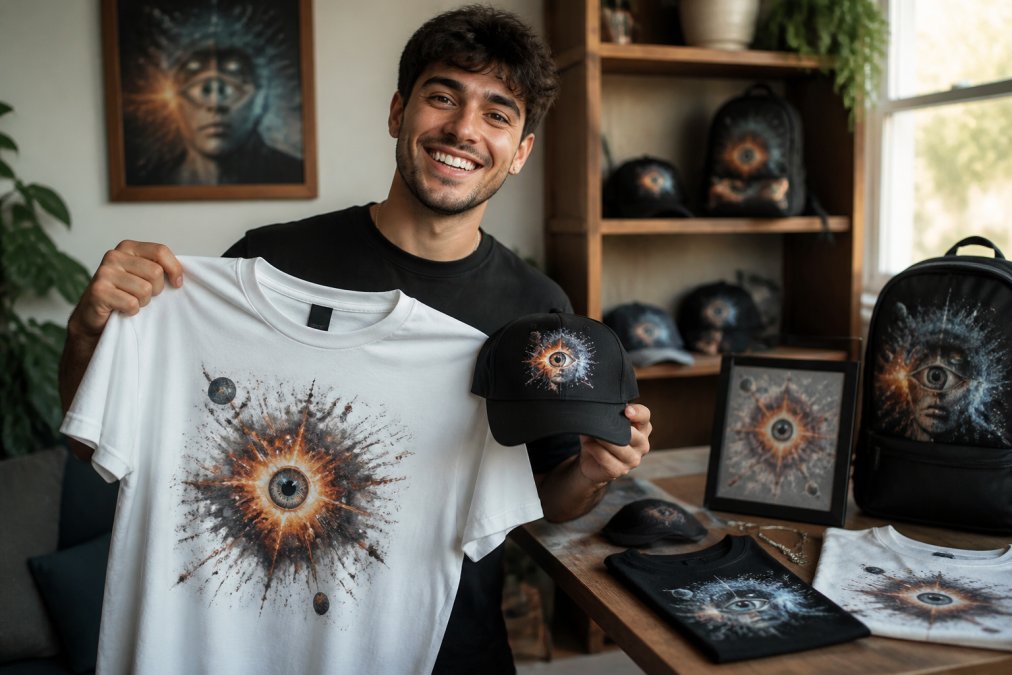
AI-Generated Designs & Personalization Trends
AI design generation has moved from novelty to standard practice. Platforms like Vireous.Shop use DALL-E 3 to generate unique artwork from text prompts. The advantage isn't just speed, it's uniqueness. Every design is one-of-a-kind because it's generated fresh from your description.
The psychology matters here. Audiences increasingly value personalization and individuality. Mass-produced designs feel generic. AI-generated designs feel bespoke, even when they're mass-produced. That perception drives higher perceived value.
Practical approach: use AI to generate 5-10 design variations based on your channel's aesthetic. Show them to your audience in a community post. Let them vote. Produce only the winners. This validates demand before you commit inventory, and it makes your audience feel invested in the design process.
The limitation of pure AI generation: consistency. If your brand relies on a specific visual style (a logo, a color palette, a typography system), AI can drift. Use AI for accent designs and unique pieces, but keep your core branding consistent across all products.
Catchphrase & Inside-Joke Merchandise
The highest-converting merch connects to your audience's shared experience with your content. Inside jokes, recurring catchphrases, running gags, these create belonging. Fans wearing your merch become brand ambassadors because the shirt communicates membership in a community.

This is where vloggers have an advantage over traditional brands. You have authentic catchphrases your audience actually uses. You have running jokes from your videos. You have community references. Translate those directly into merch.
Example framework: audit your last 50 videos for repeated phrases, jokes, or visual gags. Pick the top 5 that appear most frequently and resonate most strongly in comments. Design merch around those five concepts. Each design should be simple enough to print clearly but specific enough to signal insider knowledge.
The execution matters. "I said a funny thing once" doesn't work as merch. "Here's the specific phrase my audience quotes back to me constantly" works. The difference is specificity. Generic phrases feel like corporate merch. Specific inside jokes feel like community.
Limited-Edition Drops & Seasonal Themes
Scarcity drives urgency. Open-ended merch stores underperform because there's no reason to buy today instead of next month. Limited-edition drops create artificial scarcity and time pressure.
The 2026 trend is micro-drops: small quantities (100-500 units), short windows (24-72 hours), and frequent rotation. Instead of one massive drop per quarter, vloggers are running 2-3 drops per month. This keeps merch fresh, maintains audience engagement, and reduces inventory risk.
Seasonal themes provide natural drop hooks. Back-to-school, holiday season, summer, anniversary dates tied to your channel launch. Each season gives you a reason to design new products and announce them to your audience.
Practical framework: plan 12 drops for the year. Assign each to a season or channel milestone. Design around that theme. Announce 2 weeks before launch. Run the drop for 48-72 hours. Close it. Move to the next one. This rhythm keeps merch top-of-mind without feeling like constant selling.
Influencer Merchandise Marketing Strategies That Convert
Launching merch is easy. Selling merch is the hard part. Most vloggers announce their store once and expect sales to flow. The creators seeing real revenue treat merch marketing like content marketing: strategic placement, audience segmentation, and multiple touchpoints.
Integrating Merch Into Your Social Media & Videos
Merch mentions work best when they're organic to your content, not bolted on. The difference between "I'm selling a t-shirt" and "I'm wearing a t-shirt I designed" is massive. One feels like an ad. One feels like you're sharing something you made.
Practical integration points: wear your merch in videos. Use it as a prop. Reference it in community posts without a direct sales pitch. Let your audience discover it rather than pushing it.
The multi-platform approach matters. YouTube video mentions drive awareness. TikTok and Instagram Reels drive urgency (shorter videos, quick cuts). Community posts drive repeat exposure. Email (if you have a list) drives conversion. Each platform serves a different stage of the customer journey.
Timing is critical. Don't mention merch randomly. Mention it when you're discussing your brand, your community, or the specific topic the merch is tied to. Context makes the mention feel earned rather than forced.
Building Customer Loyalty Through Exclusive Merch
Repeat customers are worth 5-10x more than one-time buyers. The fastest way to create repeat customers is exclusive access. Limited designs, early access to drops, member-only products, these create reasons for fans to stay engaged and buy multiple times.
If you have a membership or Patreon, exclusive merch is a natural perk. Design products available only to members. This drives membership signups and increases member lifetime value. The merch doesn't need to be expensive, it just needs to be exclusive.
Another approach: loyalty tiers. First purchase gets a discount code. Second purchase gets earlier access to the next drop. Third purchase gets a free exclusive item. This gamifies purchasing and increases average customer lifetime value.
The psychology: customers who buy once are primed to buy again. Removing friction for repeat purchases (early access, member discounts, loyalty rewards) converts them into habitual buyers. A customer who buys 5 items across a year is worth more than 5 one-time customers.
Print-on-Demand vs. Pre-Stocked Inventory: What Works for Vloggers
This decision determines your entire business model and tax structure. Print-on-demand means zero inventory risk but lower margins and slower fulfillment. Pre-stocked inventory means capital outlay, storage costs, and inventory risk, but higher margins and faster shipping. Understanding the financial mechanics of each model is critical before you commit.
The Print-on-Demand Model: Margin Math and Risk Profile
Print-on-demand platforms handle manufacturing, quality control, and fulfillment. You upload designs, customers order, the platform produces and ships. Your role is design and marketing.
The financial reality: a $25 t-shirt through print-on-demand nets you $8-12 profit depending on the platform and product. A $50 hoodie nets you $15-20. A $15 mug nets you $4-6. These margins are real but require volume to compound into meaningful revenue. Selling 100 t-shirts monthly ($800-1,200 profit) is different from selling 1,000 ($8,000-12,000 profit).
The hidden advantage of POD isn't just margin, it's optionality. You can test 10 designs simultaneously. You can kill designs that underperform without sunk costs. You can pivot your entire product line in days. This flexibility is worth 5-10% lower margins for most vloggers because failed inventory is invisible.
The fulfillment speed varies by platform. Vireous.Shop offers same-day or next-day dispatch, which enables time-sensitive drops. Printful and Printify typically take 3-5 business days. Spring takes 2-3 business days. For vloggers running 48-hour limited drops, fulfillment speed directly impacts customer satisfaction and repeat purchases. Slow fulfillment kills the scarcity narrative.
Tax and compliance: POD platforms handle sales tax collection in most U.S. states, but you're responsible for reporting income. You'll need an Employer Identification Number (EIN) from the IRS if you're treating merch as a business (which you should). The IRS requires self-employed individuals to file Schedule C (Form 1040) and pay self-employment tax on net profit. Most vloggers underestimate this liability. Budget 25-30% of gross profit for federal and state taxes, not just income tax.
The Pre-Stocked Inventory Model: Capital Requirements and Break-Even Analysis
Pre-stocked inventory means you manufacture in bulk, store the products, and fulfill orders yourself or through a third-party logistics (3PL) provider. This requires upfront capital and operational complexity.
The financial mechanics: bulk manufacturing costs drop significantly at scale. A $25 t-shirt that costs $8-10 to print on-demand might cost $4-6 to manufacture in bulk (500+ units). A $50 hoodie that costs $15-18 in POD might cost $8-12 in bulk. The margin difference is substantial: 50%+ versus 30-40%.
But you must account for hidden costs. Manufacturing setup fees ($200-500 per design). Shipping from the manufacturer to your warehouse or 3PL ($0.50-2 per unit depending on weight and distance). Storage costs ($0.50-2 per unit monthly depending on size and 3PL provider). Returns and damaged goods (typically 2-5% of inventory). Quality control labor (inspecting incoming inventory).
Break-even calculation: if you manufacture 500 t-shirts at $5 per unit, your total cost is $2,500 plus $500 setup plus $250 shipping plus $100 storage (first month) = $3,350. You need to sell 335 units at $10 profit each to break even. If you sell only 200 units, you've lost $1,350. This is the inventory risk that POD eliminates.
Pre-stocked inventory makes financial sense only when you have predictable demand. If you know you'll sell 1,000+ units of a design within 30 days, the bulk manufacturing margin justifies the capital and risk. If you're uncertain, pre-stocking is a capital trap.
The Hybrid Model: Validation Before Commitment
The optimal strategy for most vloggers is hybrid: use print-on-demand for experimental designs and limited drops. Once you identify bestsellers (designs that sell 500+ units or generate 30%+ of total revenue), move those to pre-stocked inventory.
This approach combines POD's flexibility with bulk manufacturing's margins. You're not betting capital on unproven designs. You're validating demand first, then scaling winners.
Practical framework: run 4-6 POD drops (2-3 months of data). Track which designs sell fastest and which languish. The top 20% of designs typically drive 80% of revenue. Pre-stock only those winners. Everything else stays print-on-demand. This minimizes inventory risk while capturing margin upside on proven products.
The operational complexity of pre-stocking includes managing inventory levels, coordinating with manufacturers, handling customer returns, and managing cash flow. Most vloggers underestimate this burden. If you're not prepared to manage inventory as a business function, stick with POD.
Legal and Compliance Considerations for Scaling
As your merch revenue grows, legal and tax obligations become critical. The IRS classifies merch income as self-employment income if you're operating as a sole proprietor. You owe self-employment tax (15.3% on net profit) in addition to income tax. Many vloggers discover this liability too late.
If your merch revenue exceeds $5,000 annually, consider forming an LLC or S-corporation. This provides liability protection (if a customer is injured by a defective product, they sue the business, not you personally) and may offer tax advantages. Consult a CPA or tax professional, the cost ($500-2,000 annually) is worth the protection.
Trademark and intellectual property: if you're using a logo or brand name, consider registering it with the U.S. Patent and Trademark Office. This costs $250-400 per application and protects your brand from competitors copying your designs. If you're using fan art or user-generated content on merch, get written permission from the creator. Using someone else's artwork without permission exposes you to copyright infringement claims.
Product liability insurance is often overlooked. If a customer claims your t-shirt caused a skin reaction or your mug broke and injured them, liability insurance covers legal costs. General liability policies cost $300-800 annually for small creators.
Decision Framework: When to Switch Models
Switch from POD to pre-stocked inventory when:
- A single design has sold 500+ units through POD
- You have 3+ designs each selling 300+ units
- Your monthly merch revenue exceeds $3,000
- You have 6+ months of sales data showing consistent demand patterns
- You have capital available (ideally 3-6 months of operating expenses in reserve)
Stay with POD when:
- Your audience is under 50,000 subscribers
- Your monthly merch revenue is under $2,000
- You're testing new designs or niches
- You lack capital for inventory investment
- Your audience demographics are volatile or unpredictable
The hybrid model works best for most vloggers: POD for experimentation, pre-stocking for proven winners. This balances risk, capital requirements, and margin optimization.
Designing Your Brand Identity Through Custom Apparel
Your merch is a brand extension that communicates who you are and what your channel stands for. But design is only half the equation. The post-purchase experience, unboxing, packaging, customer support, and returns, shapes how customers perceive your brand and whether they buy again.
Visual Identity System: Consistency Across Products
Start with a visual identity system. This doesn't need to be complex. It's a color palette (3-5 colors), a typography choice (1-2 fonts), and a logo or mark. Every merch design should align with this system. Consistency builds recognition and makes your merch instantly identifiable.
The most successful vlogger merch incorporates their channel's visual language. If your videos use bold, bright colors, your merch should too. If your aesthetic is minimal and monochrome, your merch should reflect that. The merch should feel like a natural extension of your content, not a departure.
Consider the wearer's perspective. They're wearing your brand on their body. They're making a public statement. Design accordingly. A design that looks clever in a Figma file might feel awkward when printed on a t-shirt and worn in public. Test designs by imagining yourself wearing them to a coffee shop or gym. Would you feel confident? Would others recognize it as your brand?
Quality matters more than complexity. A simple, well-executed design on premium apparel outsells a complex design on cheap material. Your audience is buying your brand, not the design. Premium materials signal that you respect them and take your brand seriously.
Trademark Protection and Legal Considerations
As your merch brand grows, protecting your intellectual property becomes critical. If you're using a logo, catchphrase, or visual mark consistently across your merch, consider registering it as a trademark with the U.S. Patent and Trademark Office (USPTO).
Trademark registration costs $250-400 per application and takes 4-6 months to process. The benefit: exclusive legal right to use that mark in commerce. If a competitor copies your logo or catchphrase on merch, you can send a cease-and-desist letter or pursue legal action. Without registration, your legal options are limited.
The practical threshold: if your merch revenue exceeds $5,000 annually and you have a distinctive logo or brand mark, trademark registration is worth the investment. If you're using generic phrases or designs, registration is less critical.
Avoid these IP pitfalls:
Using fan art without permission. If you're featuring fan-created artwork on your merch, get written permission from the creator. Many vloggers assume fan art is free to use because fans created it. This is legally incorrect. The fan retains copyright unless they explicitly transfer it to you. Using fan art without permission exposes you to copyright infringement claims and takedown notices.
Copying competitor designs. If another vlogger or brand has a similar design, don't assume it's fair game. If the design is distinctive enough to be protected by copyright, copying it is infringement. The safe approach: create original designs or use licensed artwork from platforms like Unsplash, Pexels, or Shutterstock (verify the license allows commercial use).
Infringing on existing trademarks. If your merch uses words, phrases, or logos that are already trademarked by another company, you risk a cease-and-desist letter. Before finalizing a design, search the USPTO trademark database (tmsearch.uspto.gov) to confirm your mark isn't already registered.
Post-Purchase Experience: Unboxing and Packaging
The moment a customer receives your merch is when they form their lasting impression. The unboxing experience directly impacts whether they post about it on social media, leave a positive review, and buy again.
Unboxing psychology: customers expect packaging that matches the perceived value of the product. A $25 t-shirt in a plain poly mailer feels cheap. The same t-shirt in branded packaging with a thank-you note feels premium. The cost difference is $0.50-2 per order, but the perceived value increase is 20-30%.
Practical unboxing strategy:
Branded packaging. Use custom mailers or boxes with your logo. This costs more than generic packaging but creates a memorable unboxing moment. Customers are more likely to photograph and share branded packaging on social media, which is free marketing.
Thank-you notes or cards. Include a handwritten or printed thank-you note. This humanizes the transaction and makes customers feel valued. For high-volume operations, printed cards are sufficient. For smaller drops, handwritten notes create deeper connection.
Tissue paper or filler. Use branded tissue paper or eco-friendly filler (recycled paper, biodegradable packing peanuts). This adds perceived value and signals that you care about the unboxing experience.
Surprise and delight. Include a small bonus item: a sticker, a discount code for the next drop, or a sample of a new design. This creates positive surprise and increases the likelihood of repeat purchases.
The ROI on unboxing: customers who receive premium packaging are 40-60% more likely to post about it on social media and 25-35% more likely to purchase again. For vloggers, user-generated content (customers posting unboxing videos or photos) is invaluable marketing.
Customer Support and Returns Management
Most vloggers focus on getting the sale and ignore post-purchase support. This is a mistake. How you handle customer issues determines your brand reputation and repeat purchase rate.
Common issues:
Size and fit problems. Customers order the wrong size or the fit doesn't match their expectations. Have a clear size chart on your store. Offer free returns or exchanges for sizing issues. The cost of a return ($5-10 shipping) is worth the customer goodwill and positive review.
Quality defects. A seam is loose, the print is faded, or the material feels cheap. Inspect incoming inventory from your manufacturer. If defects are common, switch manufacturers. For isolated defects, offer immediate replacement or refund. Document the defect (ask for photos) to identify patterns.
Shipping delays. Your fulfillment partner is slow or the carrier loses the package. Set clear expectations: "Orders ship within 3 business days. Delivery takes 5-7 business days." If a package is delayed, proactively reach out to the customer with tracking information and a discount code for the next purchase.
Wrong item shipped. The customer ordered a hoodie and received a t-shirt. This is rare but devastating to trust. Offer immediate replacement with return shipping paid by you. The cost ($15-20) is worth maintaining the customer relationship.
Support infrastructure: use a simple system to track customer issues. Google Sheets, Airtable, or a basic CRM like HubSpot's free tier works. Log the issue, the resolution, and the outcome. After 50-100 orders, you'll see patterns. If 5% of customers report sizing issues, your size chart is wrong. If 3% report quality defects, your manufacturer is unreliable.
Response time matters. Respond to customer inquiries within 24 hours. Most vloggers are slow to respond, which creates frustration. Fast, helpful responses turn upset customers into loyal advocates.
Building Brand Loyalty Through Exclusive Experiences
Merch is a tangible expression of fandom, but it's also a tool for building deeper community connection. Exclusive merch creates reasons for fans to stay engaged and buy repeatedly.
Exclusive merch strategies:
Member-only designs. If you have a membership or Patreon, create designs available only to members. This drives membership signups and increases member lifetime value. The design doesn't need to be expensive; it just needs to be exclusive.
Early access drops. Announce new designs to your email list or community members 24-48 hours before public launch. This rewards your most engaged fans and creates a sense of VIP status.
Loyalty tiers. First purchase gets a discount code. Second purchase gets earlier access to the next drop. Third purchase gets a free exclusive item. This gamifies purchasing and increases average customer lifetime value.
Seasonal exclusives. Design limited products tied to specific events (channel anniversary, seasonal holidays, milestone celebrations). These create urgency and give fans reasons to buy multiple times per year.
The psychology: customers who buy once are primed to buy again. Removing friction for repeat purchases (early access, member discounts, loyalty rewards) converts them into habitual buyers. A customer who buys 5 items across a year is worth 5-10x more than 5 one-time customers.
Common Mistakes to Avoid When Launching Vlogger Merch
Most vloggers make predictable errors that tank their first merch launch. Recognizing these patterns helps you avoid them.
Mistake 1: Launching without audience validation. You design in secret, launch with fanfare, and discover your audience doesn't want what you made. Avoid this by testing designs with your community first. Post mockups in community posts. Ask for feedback. Launch only designs your audience explicitly requests.
Mistake 2: Overcomplicating designs. Designers tend toward complexity because simple feels boring. Your audience doesn't care about design sophistication. They care about clarity and relevance. Simple, bold designs print better, photograph better, and communicate faster than intricate artwork.
Mistake 3: Ignoring profit margins. You're so excited about launching merch that you accept the first platform's terms without comparing margins. Spend 30 minutes comparing profit per unit across platforms. The difference between 30% and 50% margins compounds quickly.
Mistake 4: Treating merch as a one-time event. You launch, make some sales, then disappear for six months. Your audience forgets about your store. Treat merch as an ongoing revenue stream. Plan regular drops. Keep merch visible. Integrate it into your content calendar.
Mistake 5: Poor quality control. You choose the cheapest print provider to maximize margins. The products arrive with quality issues. Your audience complains. Your brand takes a hit. Spend the extra margin on quality. Your reputation is worth more than 5% profit increase.
Mistake 6: Failing to use social proof. You don't ask happy customers for reviews or testimonials. You don't showcase unboxing videos. You don't highlight customer photos wearing your merch. Social proof is free marketing. Actively collect and share it.
Mistake 7: Setting prices too low or too high. You either undervalue your brand and leave money on the table, or you price so high that conversion plummets. Research what your audience pays for similar merch. Price within that range but slightly premium, you're offering exclusivity and personal connection, not competing on price.
The merch opportunity for vloggers in 2026 is real, but it requires treating it like a business, not a side project. The platforms have matured. The tools are accessible. The audience appetite exists. What separates successful merch operations from failed ones is strategy: design validation, consistent marketing, quality execution, and regular drops.
Vireous.Shop's AI-powered design approach and same-day fulfillment remove traditional barriers. You can test ideas rapidly, validate demand, and ship fast. The platform handles the technical complexity so you can focus on what you do best: creating content and building community. Start with a single drop. Validate the process. Scale from there.
Frequently Asked Questions
Where do successful vloggers get their custom merch made in 2026?
Most vloggers use print-on-demand platforms like Fourthwall, Printful, or Printify, which handle manufacturing and fulfillment without upfront costs. Vireous.Shop stands out for AI-powered design generation and same-day dispatch. Larger creators often use dedicated fulfillment partners like Fulfyld or GSB Digital for premium, personalized packaging that builds brand loyalty and strengthens audience connection.
What are the biggest vlogger merch design ideas trending right now?
AI-generated personalized designs are dominating in 2026, allowing creators to offer one-of-a-kind pieces that reflect audience individuality. Catchphrases and inside jokes from your videos remain bestsellers, as do limited-edition drops that create urgency. Eco-friendly materials and sustainable custom apparel are gaining traction with conscious audiences. Wall art and home decor featuring AI-inspired designs are also trending alongside traditional branded apparel.
How do I choose the right print-on-demand site for my vlogger merch?
Consider your audience size and growth stage. Smaller creators benefit from Fourthwall's YouTube integration and all-in-one approach. If you need diverse product options and flexibility, Printful or Printify offer 900+ customizable items. For fast turnaround and AI design capabilities, Vireous.Shop delivers same-day or next-day dispatch. Evaluate profit margins, shipping times, design tools, and integration with your existing platform before committing.
Can you actually make money with print-on-demand vlogger merch in 2026?
Yes, but profit margins vary significantly. Print-on-demand typically offers 20-40% profit margins after production and fulfillment costs. Success depends on audience size, engagement rate, and marketing strategy. Vloggers with 5,000+ engaged followers see consistent sales. Pre-stocked inventory can yield higher margins (40-60%) but requires upfront investment. Most profitable creators combine print-on-demand for low-risk testing with pre-stocked items for bestsellers.
What influencer merchandise marketing strategies actually drive sales?
Integrate merch naturally into your content, wear it in videos, mention it in descriptions, and create dedicated unboxing or reveal segments. Use exclusive drops and limited-time offers to create urgency. Offer early access or special bundles to your most loyal fans. Build email lists to announce new products directly. Leverage social media shopping features on Instagram and TikTok. Track which designs and products perform best using analytics, then double down on winners.
This article was written using GrandRanker