Table of Contents
Last Updated: October 21, 2026
Why Canvas Art Degrades: Light, Heat, and Moisture
Sunlight and humidity are the two quiet destroyers of canvas art. Light fades pigment, heat dries and stresses canvas fibers, and moisture invites mold and warping. Together they age a piece faster than almost anything else in your home.
 Holding Hands by Raissa Oltmanns, Canvas Art Print
At Vireous.Shop, we print canvas art every day, so we think hard about how it survives once it leaves us. Protecting canvas art from sunlight and humidity starts with one idea: control the room, not just the frame.
Here is what each threat actually does:
-
UV rays break down pigment and cause fading and discoloration.
-
Visible light adds heat and gradual color shift over years.
-
Heat dries canvas fibers and can crack paint or ink.
-
Moisture swells the canvas, warps the stretcher frame, and feeds mold.
The fix is rarely one product. It is a set of small habits.
Protecting Art from Direct Sunlight: Room Assessment and Hanging Checklist
The fastest way to protect art from direct sunlight is to hang it where the sun never lands on it. Walk your room at different times of day and note where light actually falls before you pick a wall.
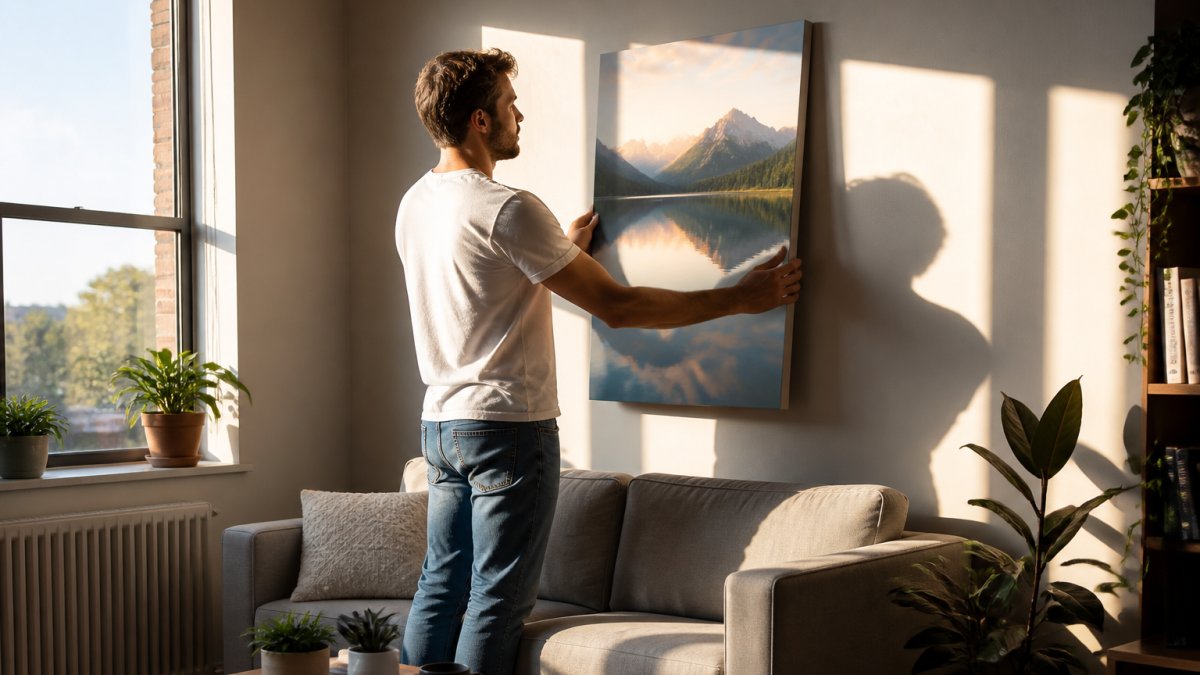 A person standing in a sunlit living room holding a canvas art print against the wall, checking where afternoon light falls across the room
Use this room assessment and hanging checklist:
A wall that looks safe at noon can catch a hot beam at 4 p.m. The seasons move the sun, so a spot that works in winter may fail in summer. Check twice a year.
UV Protection for Canvas Art: Glazing, Films, and Trade-Offs
UV protection slows fading but never stops it. UV-filtering glass, UV acrylic, conservation glazing, and window film all cut harmful rays, yet visible light still does damage over time. That is the trade-off most guides skip: UV glazing handles the ultraviolet band, but fading also comes from visible light, heat, and cumulative exposure.
Your options, ranked by effort:
-
UV acrylic or conservation glazing: built into the frame, blocks most UV.
-
Window film: applied to the glass, protects everything in the room.
-
UV-filtering glass: a strong choice for framed pieces.
-
Curtains and blinds: the cheapest, most effective block of all.
Here is the honest trade-off. Glazing adds a layer between viewer and canvas, and cheap acrylic can dull color vibrancy or build static. Film on windows helps the whole room but needs clean installation. None of these replace smart placement. A framed piece behind UV glazing in a sunbeam will still fade faster than an unglazed piece in a dim hallway, because visible light and heat do their own damage.
Think in terms of total exposure. The longer a piece sits in bright light, the more cumulative fading occurs, even with UV protection. Rotating art, drawing blinds during peak sun, and choosing indirect light all reduce exposure in ways glazing cannot.
Watch Out
Skipping UV protection because "the room looks dim" is a common mistake. Reflected sunlight off a floor or table still fades pigment. If a window is anywhere near the piece, assume UV is reaching it.
Key Takeaway
UV glazing is one layer of defense, not a force field. Pair it with placement, blinds, and lower light levels for real protection.
How to Protect Canvas Art from Humidity: Targets, Warning Signs, and Fixes
To protect canvas art from humidity, keep relative humidity steady and avoid damp rooms entirely. The practical target for most homes is a stable 40-50% relative humidity, with short-term swings kept inside roughly 35-55%. Museum conservation guidelines often aim tighter, near 45-55% with minimal fluctuation, but that level usually requires dedicated HVAC and monitoring. For a home display, steadiness matters more than hitting an exact number.
Moisture is sneakier than light. It works from the back of the canvas and the stretcher frame, where you cannot see it until damage shows. Canvas and wood respond to humidity by swelling and shrinking; repeated cycles loosen the weave and warp the stretcher.
Watch for these warning signs:
- Ripples or sagging in the canvas
- A musty smell near the piece
- Condensation on glazing or the frame
- Dark spots or fuzzy growth suggesting mold
- Warping in the wooden stretcher frame
- Paint or ink lifting at the edges
Measure rather than guess. A cheap hygrometer from any hardware store shows relative humidity at a glance. Place it near the artwork, not across the room, and log readings weekly for the first month. If the number swings more than about 10 points between seasons, move the art to a steadier interior room. Avoid exterior walls, which run colder and condense moisture, and keep art out of bathrooms and away from kitchens, where steam spikes humidity fast.
The Corniche Near Monaco (1884) by Claude Monet, Canvas Art Print from →
If you spot dampness or suspect mold, act fast. Move the art to a dry, ventilated room and let it air out away from direct heat. Do not wipe mold into the canvas, and do not use a hair dryer or space heater to force-dry it, which can crack paint and warp the frame. For valuable or original pieces, call a conservator rather than guessing.
Pro Tip
A cheap hygrometer from any hardware store shows your room's relative humidity at a glance. Check it weekly. If the number swings hard between seasons, move your art to a steadier room.
Watch Out
Brief humidity spikes during cooking, showers, or storms are normal. The damage comes from sustained dampness and repeated wet-dry cycles, so focus on steady conditions rather than chasing every short bump.
How to Store Canvas Paintings Safely When They Come Off the Wall
How to store canvas paintings comes down to three rules: keep them dry, keep them cool, and keep them off the floor. Moisture and heat cause most storage damage.
Follow these steps:
- Clean and fully dry the canvas before storing.
- Wrap it in acid-free paper, not plastic, so it can breathe.
- Stand it upright on a padded edge, never flat on its face.
- Store in a dry, climate-steady room, not a basement or attic.
- Keep it away from dampness, heat sources, and pests.
- Check it every few months for moisture or warping.
Plastic wrap traps moisture and is a common mistake. Choose a dry environment with airflow instead.
Original Paintings vs. Printed Canvas: Different Risks, Different Care
Original oil paintings and printed canvas age differently, so they need different care. An original carries layers of paint that crack and yellow, while a printed canvas depends on ink and coating.
For original oil paintings, watch for:
- Cracking and flaking paint as canvas flexes
- Yellowing varnish over time
- Dirt settling into textured brushwork
For printed canvas, watch for:
- Fading pigment from UV and visible light
- Surface scratches on the coating
- Warping if the frame gets damp
Our printed pieces, like The Corniche Near Monaco by Claude Monet, use a textured cotton canvas built for indoor display. Even so, the same rules apply: keep it out of direct sunlight and away from moisture.
 The Corniche Near Monaco (1884) by Claude Monet, Canvas Art Print from the Original
When in doubt about an original, consult a conservator. For prints, smart placement and steady humidity go a long way.
Conclusion
Canvas art fades and warps for boring reasons: sun, heat, and moisture. The good news is that small habits, like checking your room's light and watching humidity, protect a piece for years.
At Vireous.Shop, we make it easy to bring unique canvas art into your space. Our made-to-order prints use quality canvas and UV-protected inks, with fast dispatch and a Money Back Guarantee. Ready to create something worth protecting? Customize your own canvas art today.
Frequently Asked Questions
What humidity level is best for storing canvas art?
Aim for a stable relative humidity between 40% and 50%. Below 40% dries out canvas fibers and makes them brittle; above 50% invites mold and warping. Use a cheap hygrometer (under $20 at hardware stores) to monitor the room. Avoid rooms with constant swings, like bathrooms and basements. If humidity creeps above 55%, run a dehumidifier or move the piece to a drier interior wall. Stability matters as much as the number itself.
Can humidity damage a canvas print?
Yes. Printed canvas is vulnerable because moisture weakens the canvas fibers and can cause ink to lift, bleed, or crack. Signs include rippling along the stretcher frame, a musty smell, and white or gray fuzz on the surface. If you spot these, move the piece to a dry room, let it air out flat, and do not wipe mold with water. For how to protect canvas art from humidity long term, keep it off damp exterior walls and away from bathrooms.
How do you prevent canvas art from fading?
Fading comes from ultraviolet light and visible light exposure over time. Hang canvas art away from windows that receive direct sun, use UV-filtering glazing or window film, and rotate pieces every few months so no single spot gets constant light. LED bulbs emit less UV than older incandescent or halogen options. Even with UV protection for canvas art, no method blocks 100% of fading, so lower light levels and shorter exposure remain the most reliable defenses.
Can you weatherproof a canvas painting for outdoor display?
Standard canvas art is not built for outdoor use. Canvas fibers absorb moisture, and temperature swings cause expansion and contraction that cracks paint and ink. If you must display a piece outdoors, use a sealed shadow box with UV acrylic and keep it under a covered porch away from rain and sprinklers. For most pieces, indoor display is the safer choice. Check the product listing for indoor-use-only guidance before hanging anything outside.