

Table of Contents
- Why Choose a Print-on-Demand Alternative
- Best Print-on-Demand Quality Guarantee Comparison
- DTG vs Screen Printing for Custom Shirts: Which Delivers Better Results
- How to Choose a Print-on-Demand Partner That Meets Your Standards
- Design Tools and Customization Workflows Across Platforms
- Sustainability and Eco-Friendly Printing Practices
- Frequently Asked Questions
Last Updated: September 2, 2026
Why Choose a Print-on-Demand Alternative
When you're building a personal brand or creating merchandise for your community, the quality of your printed products matters more than speed alone. A print-on-demand alternative to GPTShirt needs to deliver on three fronts: design flexibility, print quality that actually matches your vision, and reliability at scale.
The real problem most creators face isn't finding a service that prints fast. It's finding one that combines AI-powered design tools with consistently excellent output. Many platforms promise both but deliver neither, your design preview looks vibrant and detailed, then arrives faded or misaligned. This gap between expectation and reality costs you credibility with your audience.
At Vireous.Shop, we've built our platform specifically for creators and content makers who refuse to compromise on quality. Our integration with OpenAI's DALL-E 3 API means you can generate custom designs directly from natural language prompts, then see those designs printed on premium apparel and wall art with the same level of detail you envisioned. The difference lies in how we handle the handoff between design and production.

Print-on-demand alternatives vary wildly in their approach to quality assurance. Some treat it as an afterthought. Others build it into every step. The platforms that win are the ones that give you control over file requirements, let you test samples before scaling, and stand behind their work with genuine guarantees, not fine-print disclaimers.
Best Print-on-Demand Quality Guarantee Comparison
Quality guarantees separate serious print-on-demand platforms from the rest. A real guarantee means the company commits to specific standards for color accuracy, print durability, and fabric quality, and backs that commitment with action, not just words.
The strongest guarantees include sample testing before full production, detailed specifications for print resolution and color matching, and straightforward replacement or refund policies when products fall short. Vireous.Shop offers a Money Back Guarantee that covers both design accuracy and print quality. If your final product doesn't match the preview or shows defects in materials or printing, we replace it or refund you entirely.
Compare this to platforms that offer "best effort" language or require you to prove manufacturing defects through technical documentation. A quality guarantee worth trusting doesn't make you jump through hoops.
Here's how the strongest print-on-demand alternatives stack up on quality assurance:
| Platform | Quality Guarantee | Print Technology | Sample Testing | Color Accuracy Standard |
|---|---|---|---|---|
| Vireous.Shop | Money Back Guarantee on quality | DTG + Premium Printing | Yes, before full order | CMYK matching + visual review |
| Competitor A | Limited warranty, 30 days | DTG | No | Standard color palette |
| Competitor B | "As-is" with dispute process | Screen printing | Upon request | Industry standard |
| Competitor C | Replacement only, no refunds | Hybrid methods | No | Varies by product |
The difference matters. Vireous.Shop's guarantee covers both design fidelity and physical quality. You're not just buying a printed product; you're buying confidence that what arrives matches what you approved.
DTG vs Screen Printing for Custom Shirts: Which Delivers Better Results
Direct-to-garment printing and screen printing solve different problems. Understanding which one your project needs prevents costly mistakes.
DTG printing applies ink directly to fabric using industrial inkjet technology. It excels at photorealistic images, fine detail, and full-color designs without setup costs. DTG works best for small runs, complex artwork, and designs with gradients or photographic elements. The trade-off: DTG ink sits on the fabric surface, so durability depends on fabric quality and ink formulation. Repeated washing can fade DTG prints over time if the garment or ink quality is poor.
Screen printing forces ink through a mesh screen onto fabric, creating a durable bond. It handles high-volume production efficiently and produces vibrant, long-lasting color on cotton. Screen printing struggles with photorealistic detail and multi-color designs because each color requires a separate screen. Setup costs are significant, making small runs economically impractical.
For most print-on-demand use cases, DTG wins. It handles one-off orders and small batches without the fixed costs of screen printing. It reproduces detailed designs accurately. The catch: you need a DTG provider that invests in quality ink, maintains equipment properly, and uses premium fabrics that hold color well.
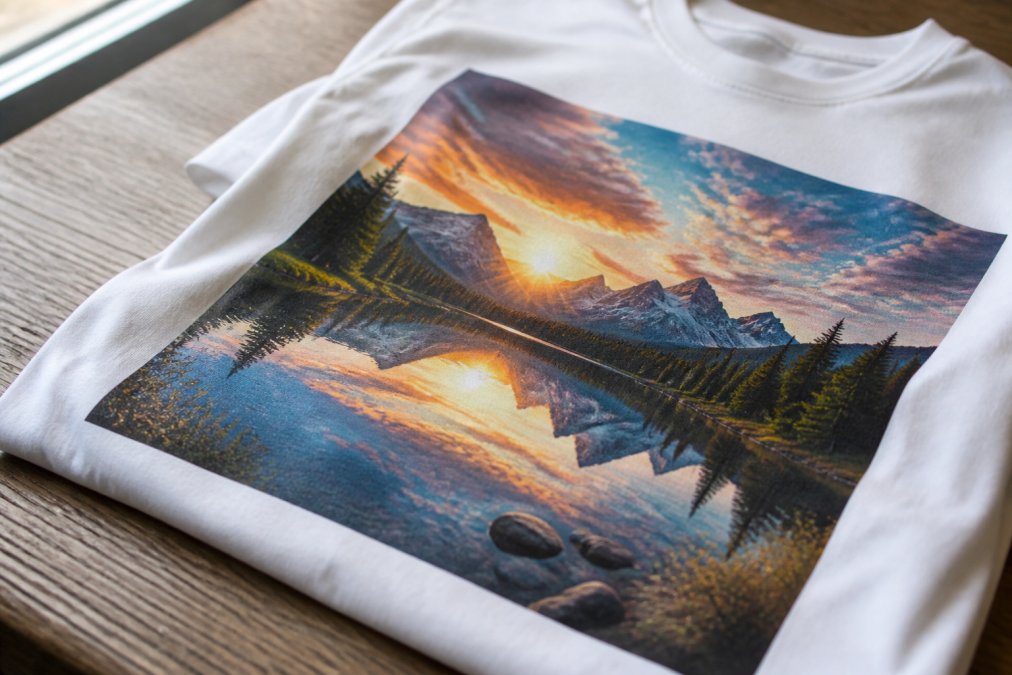
Vireous.Shop uses DTG technology paired with premium fabric sourcing. This combination delivers photorealistic designs that survive repeated washing because we start with quality garments and use professional-grade inks. The result is custom apparel that looks as good after five washes as it did fresh from the box.
Screen printing still has its place. If you're producing hundreds of units with a simple 1-3 color design, screen printing offers better economics and durability. But for the creator economy, where you're making smaller quantities with complex, custom designs, DTG is the practical choice.
How to Choose a Print-on-Demand Partner That Meets Your Standards
Choosing the right print-on-demand alternative requires evaluating five concrete factors. Skip any of them and you'll likely end up with a disappointing product.
1. File Requirements and Technical Specifications
A professional print-on-demand partner publishes exact file requirements: minimum resolution (typically 300 DPI for DTG), color mode (RGB vs. CMYK), acceptable file formats, and bleed specifications. If a platform doesn't publish these details, they don't take quality seriously.
Ask specifically about color conversion. DTG printing uses CMYK (cyan, magenta, yellow, black), but design tools often work in RGB. A quality provider explains how they convert your RGB design to CMYK and whether they offer color proofing before production.
2. Sample Testing and Approval Workflow
The best print-on-demand alternatives let you order a sample before committing to full production. Vireous.Shop enables this through our preview system, you see exactly how your design renders on the specific garment or print surface, then approve before we produce the full order.
Some platforms charge for samples; others include them. Either way, the option to test is non-negotiable. It's the only way to verify that colors match your expectations and that the print quality meets your standards.
3. Fabric and Material Quality
Premium apparel starts with premium blanks. Ask about fabric weight (measured in grams per square meter, or GSM), fiber content, and sourcing. A quality t-shirt typically uses 180-200 GSM cotton. Anything lighter feels flimsy; anything heavier becomes stiff.
Check whether the provider sources from certified suppliers. Vireous.Shop uses premium-grade blanks that hold color and shape through multiple wash cycles. This matters because a beautiful print on cheap fabric looks cheap after one wear.
4. Production Lead Times and Reliability
Same-day or next-day dispatch sounds impressive, but only if it's consistent. Ask how the provider handles rush orders and what happens if demand spikes. Vireous.Shop maintains same-day or next-day dispatch through distributed production facilities and real-time inventory management.
Verify this claim by checking independent reviews or asking for references. A provider that consistently meets timelines builds trust; one that misses deadlines destroys it.
5. Integration and Workflow Ease
If you're running a brand or selling merchandise, you need seamless integration with your e-commerce platform. Vireous.Shop connects directly to your storefront, automating design approval, production, and fulfillment. This eliminates manual back-and-forth and reduces errors.
Check whether the platform offers API access for developers or Zapier integration for non-technical users. The easier the workflow, the faster you can scale.
Design Tools and Customization Workflows Across Platforms
The design experience separates good print-on-demand platforms from great ones. A clunky design tool forces you to work around limitations. A powerful one lets your creativity flow directly into production.
Vireous.Shop's design workflow starts with natural language prompts powered by DALL-E 3. You describe what you want, "a minimalist geometric design with cool tones for a tech brand", and the AI generates variations. You refine, approve, and the design moves directly to production. No design software required.
This approach eliminates the friction of learning complex tools. It also democratizes design quality. A non-designer can generate professional-quality artwork in minutes.
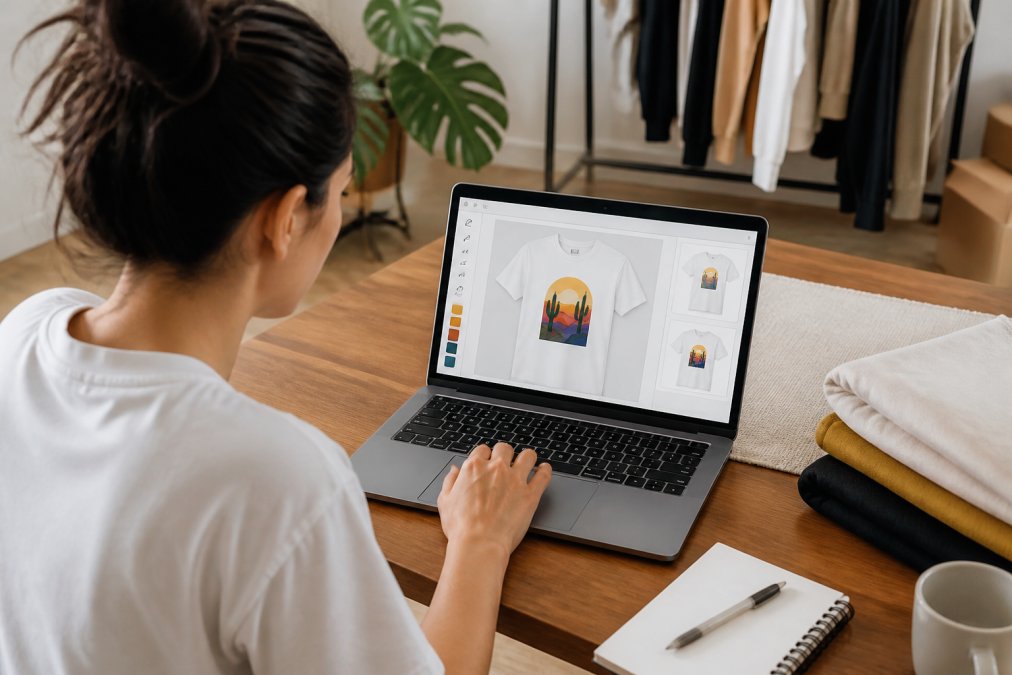
Other print-on-demand alternatives take different approaches:
Template-Based Platforms let you customize pre-made designs by changing colors, text, and layout. Fast for simple projects; limiting for unique branding.
Upload-Your-Own Systems accept finished artwork files and print them as-is. Maximum creative control; requires design skills or hiring a designer.
Hybrid Platforms combine templates, design tools, and upload options. More flexible, but often with steeper learning curves.
The advantage of AI-powered design tools is speed and accessibility. You don't wait for a designer or struggle with software. You describe your vision and refine the output in real time. For creators building personal brands or testing merchandise ideas, this workflow cuts weeks off the typical timeline.
The customization workflow should also handle variations. Can you create multiple designs for A/B testing? Can you generate variations in different colors or styles? Vireous.Shop allows unlimited design variations and stores them for reordering, which matters if you're testing what resonates with your audience.
Sustainability and Eco-Friendly Printing Practices
Sustainability matters to creators and audiences alike. A print-on-demand partner that ignores environmental impact risks damaging your brand reputation.
Eco-friendly print-on-demand practices include:
- Water-Based Inks: Reduce chemical runoff and improve worker safety compared to plastisol inks. DTG printing typically uses water-based or hybrid inks.
- Sustainable Fabric Sourcing: GOTS-certified organic cotton, recycled polyester, or regenerated fabrics reduce environmental footprint.
- Waste Reduction: Print-on-demand eliminates overproduction and excess inventory. Only what's ordered gets made.
- Carbon-Neutral Shipping: Offset programs or partnerships with carbon-neutral carriers reduce delivery impact.
- Responsible Dyeing: Facilities that treat wastewater and minimize dye chemicals.
Vireous.Shop partners with suppliers that meet sustainability standards. We prioritize water-based DTG inks and source premium fabrics from certified suppliers. Our made-to-order model means zero excess inventory, every shirt, print, or piece of wall art is created for a specific customer.
This isn't marketing. It's operational reality. Print-on-demand, by design, produces less waste than traditional manufacturing. But quality matters in sustainability too. A cheap garment that falls apart after five wears creates more waste than a premium one worn for years.
Ask your print-on-demand alternative about their sustainability certifications, ink formulations, and fabric sourcing. Transparency here indicates whether they're serious or just greenwashing.
Finding your ideal print-on-demand solution means prioritizing quality guarantee, technical transparency, and design flexibility. Vireous.Shop delivers all three through AI-powered design tools, transparent quality standards, and a Money Back Guarantee that covers both design accuracy and print quality. Whether you're creating branded apparel for your audience or producing custom wall art for personal spaces, the right platform makes the difference between a product you're proud to share and one you regret.
Start with a sample order to test the workflow and verify quality. Our same-day or next-day dispatch means you can validate the experience quickly. Explore designs using natural language prompts with our DALL-E 3 integration. See how the final product compares to your vision. If it doesn't meet your standards, our guarantee covers it.
DTG printing technology standards and specifications
GOTS certification for organic cotton and sustainable fabrics
Print-on-demand environmental impact and waste reduction
Frequently Asked Questions
Q: What makes a print-on-demand service deliver high-quality prints?
A: High-quality print-on-demand services combine three factors: premium fabric weight, advanced printing technology like direct-to-garment (DTG) or high-resolution screen printing, and strict quality control before shipment. The best providers offer sample testing, color-matching guarantees, and detailed file requirements to ensure your design translates accurately from screen to garment. Vireous.Shop uses DALL-E 3 integration for design precision and ships items within 24 hours, prioritizing both speed and output quality.
Q: How do I evaluate print-on-demand quality before ordering in bulk?
A: Request a sample or test order from your chosen print-on-demand partner before committing to bulk production. Check for color vibrancy, print sharpness, fabric feel, and durability after washing. Review their technical file requirements, vector graphics and high-resolution raster images (300 DPI minimum) produce sharper results. Read customer reviews specifically mentioning print quality and longevity. Platforms offering money-back guarantees provide confidence; Vireous.Shop backs all orders with this assurance, so you can test their quality risk-free.
Q: What's the difference between DTG and screen printing for custom apparel?
A: Direct-to-garment (DTG) printing applies ink directly onto fabric, excelling at detailed, multi-color designs and all-over prints with vibrant color reproduction. Screen printing uses mesh screens to push ink through onto garments, offering durability and cost-efficiency for solid-color or limited-color designs. DTG suits custom, one-off orders and complex artwork; screen printing works better for bulk runs with simpler graphics. Choose based on your design complexity and order volume.
Q: How do I know if a print-on-demand service can handle my custom design files properly?
A: Check the platform's technical file requirements before uploading. They should specify minimum DPI (300 DPI is standard for print quality), accepted file formats (PDF, PNG, SVG), and color space (CMYK for printing, not RGB). Ask whether they provide design previews matching final output and if they offer pre-flight checks to catch issues before production. Platforms using AI-powered design tools like Vireous.Shop's DALL-E 3 integration handle scalability automatically, converting your natural language prompts into print-ready artwork with proper resolution and color handling.
This article was written using GrandRanker