Last Updated: November 11, 2026
Quick Summary
The best wall art themes for creative professionals are abstract bold colour, surreal and figurative, and geometric pieces that match the work you do. Choose one dominant theme, place bolder art on side walls rather than behind the monitor, and anchor the room with a single large canvas.
- Pick one dominant theme that reflects the work you do, not several styles at once.
- Avoid glossy frames opposite windows, since they can reflect glare onto your screen.
- A single large canvas anchors a studio better than several small pieces.
- Size art to about two-thirds of the width of the furniture beneath it.
- Build your collection in phases, starting with one anchor piece at $24.89.
Want art that matches your creative work?Vireous.Shop offers AI-inspired canvas and framed prints for creative spaces.
Browse Wall Art Themes
Table of Contents
Why Wall Art Matters in a Creative Workspace
Your walls are the most visible part of your workspace, and what hangs on them shapes how the room feels every day. Creators and designers often treat their walls as a working surface for mood and ideas, not just decoration.
Art can do more than fill empty space. A considered piece gives the eye somewhere to rest between tasks and a point of reference when you need a fresh idea.
Abstract and Bold Color Themes for Creative Studios
Abstract work suits studios where the output is visual and experimental. Bold colour pieces tend to energise a room, while deep neutrals calm it down. A single large canvas often carries more impact than several small pieces, because it reads clearly from across the room.
Our abstract picks include:
-
"Blue" Abstract Balloon Trees Canvas Wall Art ($34.99): deep navy and blush forms with orange and teal accents. Its vertical layout suits narrow walls and high ceilings.
-
Bauhaus Red and Blue Eye Framed Wall Art ($55.99): a framed print with a premium wooden frame and acrylic front, ready to hang. The framing suits studios that want a more finished look. Browse the Bauhaus Red and Blue Eye Framed Wall Art
-
Green Squares, from the Mathematical Basis of the Arts (circa 1934) by Joseph Schillinger, Canvas Art Print ($30.47): a geometric piece in vibrant colour, a good fit for a studio that works with pattern.
Choose one bold piece as the anchor and keep the rest of the wall quieter. Two competing bright works usually cancel each other out.
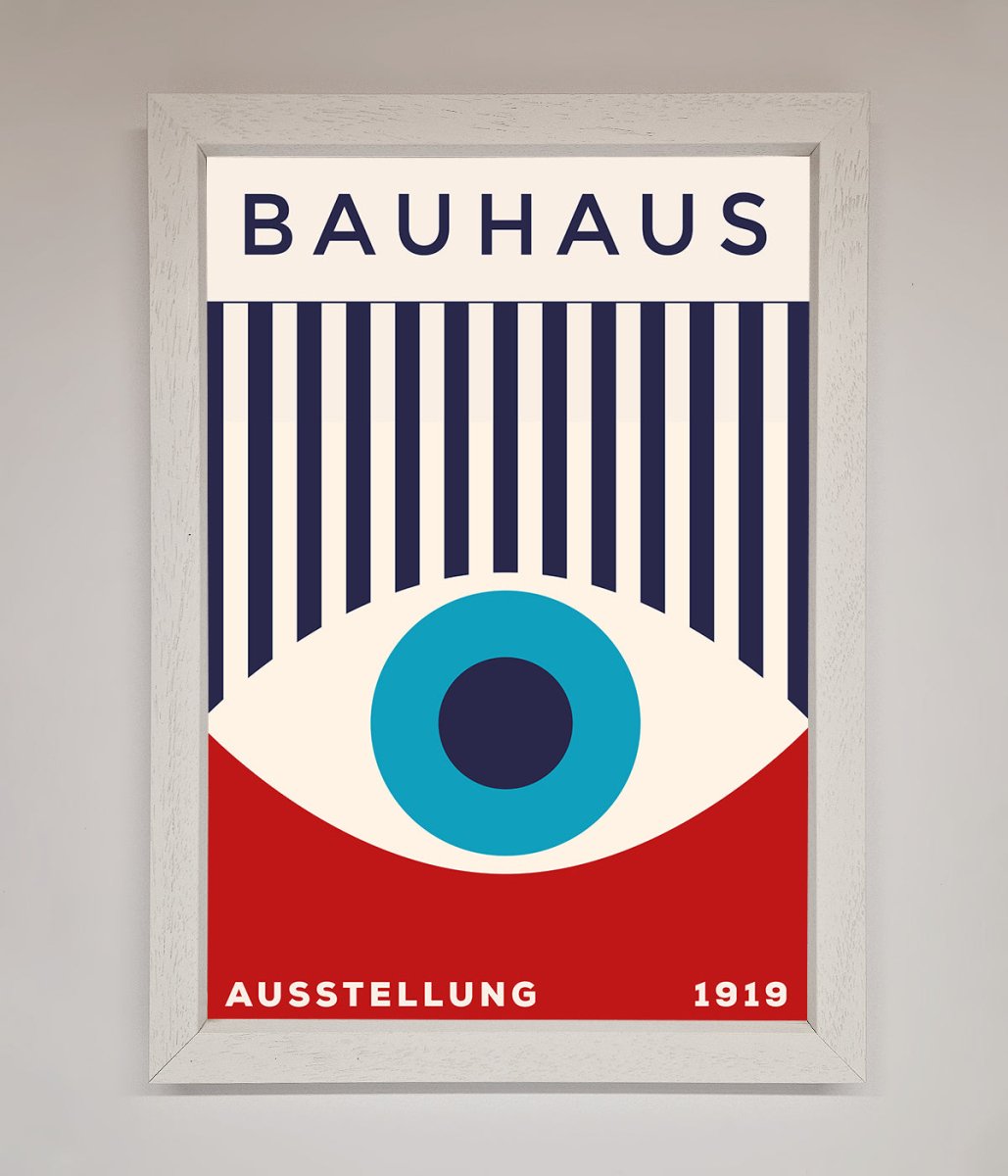 Bauhaus Red and Blue Eye Framed Wall Art
Surreal and Figurative Themes That Spark Imagination
Surreal and figurative art works well for people whose job involves invention, such as illustrators, concept artists and writers. These pieces ask a question rather than simply decorating a wall, which makes them useful when you need a prompt during a slow afternoon.
Two examples from our range:
-
Stretched Canvas Wall Art: Surreal Geometric Face and Acrobat Collage ($24.89): a split portrait that moves from a realistic profile into a geometric collage, with bold reds, blues and golds. See the Surreal Geometric Face and Acrobat Collage
-
Dreamy Surrealist Woman with Cloud TV Stretched Canvas Wall Art ($24.89): a seated figure with a television screen showing sky and clouds, set against purple. It suits eclectic living rooms and bedrooms as well as studios.
Surreal pieces carry more personality than abstract ones, so one or two in a room is usually enough.
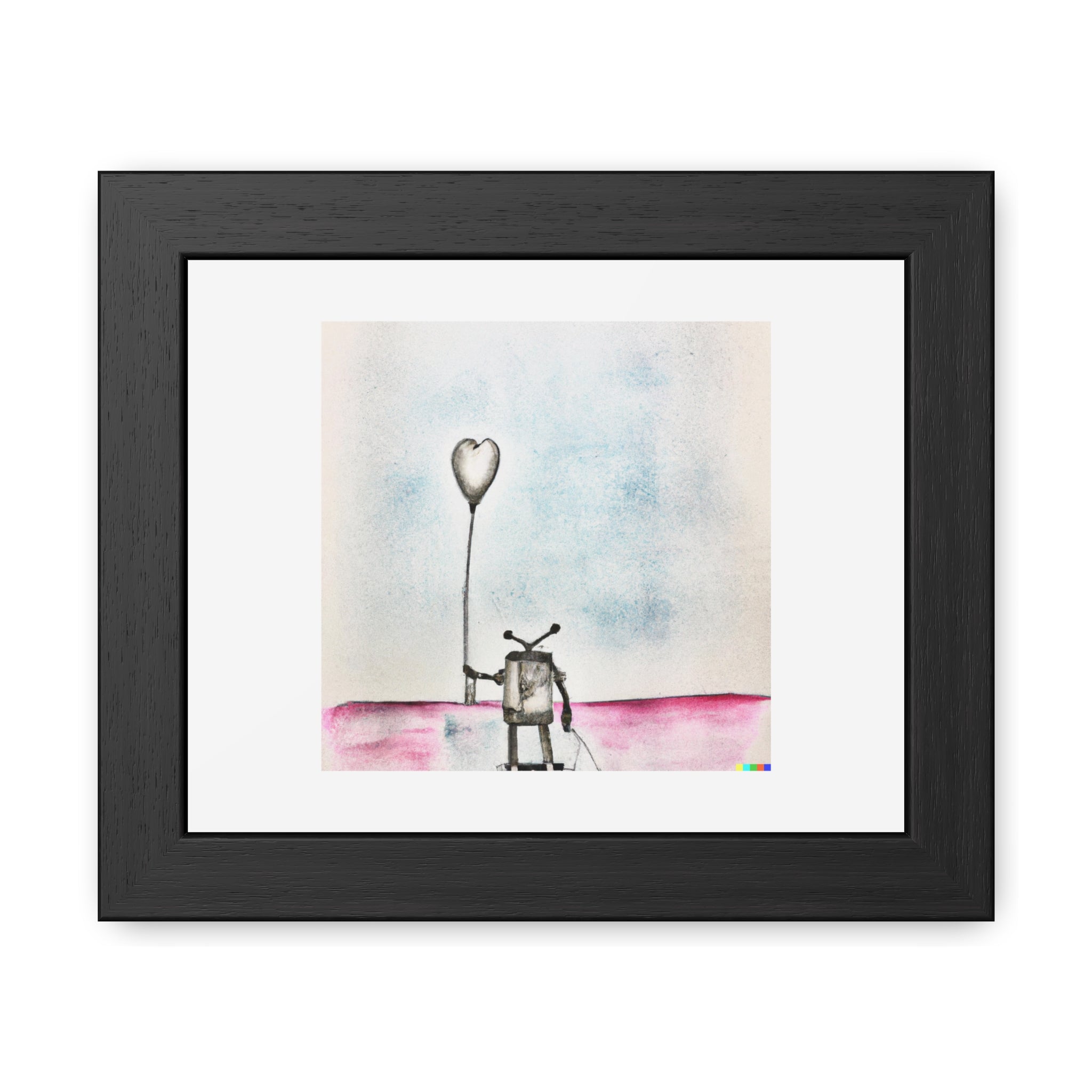 Abstract Pencil And Watercolour Art Of A Lonely Robot 'Designed by AI' Wooden Framed Print
How to Choose Wall Art for a Workspace
A working studio is a different problem from general decor. The art has to coexist with monitors, cameras, drafting tables, lighting rigs and the sightlines you use all day, so the selection criteria are practical before they are aesthetic.
Start with the room and the work. A designer who sketches all day needs something that holds attention without competing with the screen. A photographer might want a larger image that shows color well in natural light.
Practical criteria for a working studio
Lighting direction. Note where daylight falls at the hours you actually work.
Visual distraction. Art behind or beside your monitor competes with the screen for attention.
Work zones and equipment. Map the wall around what sits against it: monitor arms, shelving, camera tripods, cutting mats, light stands.
Keep the choice simple:
- Decide what the room is for: focus work, client meetings or idea generation.
- Pick one dominant theme rather than mixing many styles.
- Check the wall size, the light direction and the mount height before you buy.
- Test the piece in place for a week before committing.
Watch out: hanging a glossy framed print directly opposite a window can cause reflections on the screen.
Matching Art Themes to Your Creative Profession
Different professions suit different themes, and the useful question is not "what looks good" but "what does this role look at all day, and what would give the eye something different to rest on." A few common pairings:
-
Illustrators and graphic designers: bold abstract color or geometric pieces, which reflect the visual language of their work without repeating it literally. A designer who spends the day in grids may want a piece that breaks them.
-
Writers and concept developers: surreal or figurative art, which invites interpretation and story. A single figurative subject gives the eye a narrative anchor between drafting sessions.
-
Photographers: large-format prints that show color and tonal range accurately, ideally on matte stock so the work is judged rather than the frame.
-
Tattoo artists and craft makers: characterful portraits with rich detail, which feel at home in a studio full of tools and materials. Explore the Tattooed Old Woman, Whimsical Canvas Wall Art
These are starting points, not rules. The best choice is the theme you still enjoy looking at after several months.
Scale, Placement, and the 2/3 Rule
A common guideline is the 2/3 rule: a piece or group should fill about two-thirds of the width of the furniture beneath it. A sofa or desk that is 2 meters wide suits art around 1.3 meters across. Smaller pieces can look lost above a large desk, and oversized art can overwhelm a small wall.
Hang the center of the artwork at roughly eye level, about 150 to 160 centimeters from the floor for most people.
Watch out: in a studio, "eye level" should be measured from where you sit or stand while working, not from the doorway. A piece that looks right on entry can sit too high once you are seated at the desk.
Creative Office Wall Art Ideas on a Budget
Good wall art does not need a large budget, but a working studio has costs most decor guides ignore: equipment, software, materials and the wall space itself.
Canvas prints can be an affordable way to get a large, impactful piece, and a single well-chosen canvas can anchor a whole room. For an affordable abstract option, compare the abstract AI oil-painting style poster.
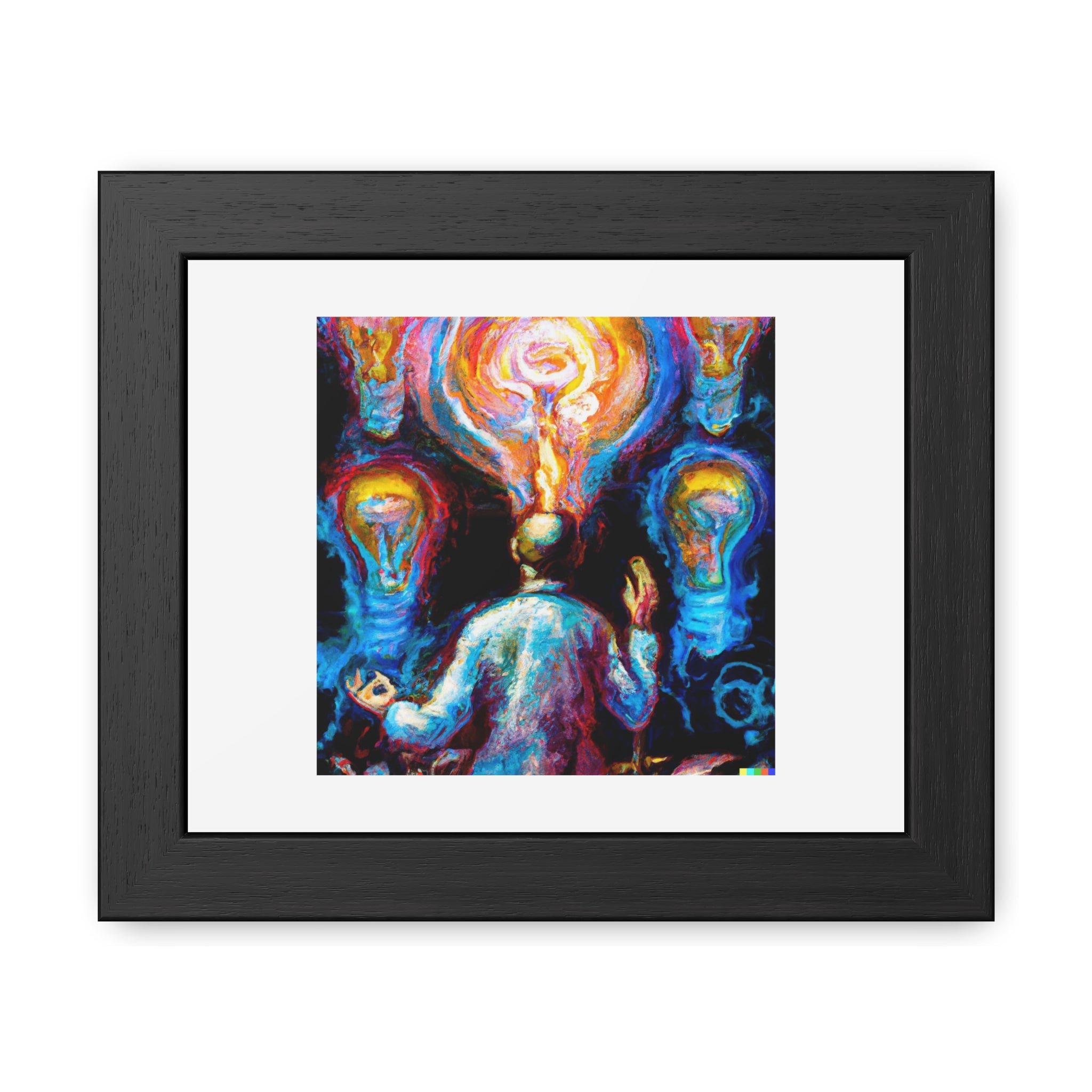 Abstract Oil Painting of Artificial Intelligence 'Designed by AI' Framed Art Print
Build in phases rather than all at once
A phased approach keeps the budget predictable and the wall coherent:
-
Phase one: one anchor piece. Buy the largest piece you can afford for the main wall before anything else. A single canvas at $24.89 anchors a room more effectively than three small prints that cost the same.
-
Phase two: one supporting piece. Add a second work in the same color family or theme so the two read as a pair rather than two separate purchases.
-
Phase three: rotate, don't accumulate. Swap pieces between rooms or store one and bring it back seasonally. Rotation keeps the room fresh without new spending.
Watch out: buying several small pieces first can leave the wall without a focal point.
Choose a theme you can extend
Pick a theme with a clear through-line, such as a color family, a subject or a frame style, so later purchases match what you already own. A color family is the most forgiving: abstract and surreal pieces that share bold reds and blues can be grouped even when the subjects differ. A subject-based theme, such as a single figurative motif, is tighter but harder to extend without repetition.
-
Unframed canvas: the lowest cost per square foot and the most forgiving in a room with screens, because matte canvas does not mirror light.
-
Framed prints: a finished look for a smaller hallway or office nook, where the frame does more visual work than the image.
-
Multi-panel canvases: a triptych can cover a wide wall for less than one oversized single canvas, and the panels are easier to move and hang.
-
DIY and rotating displays: a simple rail or clip system lets you rotate prints and sketches without reframing, which suits studios that produce their own work.
Plan the whole wall before you start
Watch the total cost of a group, not just the first piece. Three affordable canvases at $24.89 each still come to $74.67, so plan the full wall before you start and decide whether the budget is better spent on one larger piece.
Buy responsibly as well as affordably
Budget buying and ethical sourcing are not in conflict, and design-conscious professionals increasingly ask where a print came from. A few practical checks:
-
Attribution: confirm the artist or source is named, not just the title. A print that credits "circa 1934 by Joseph Schillinger," for example, tells you what you are buying; an unattributed reproduction does not.
-
Licensing: for reproductions of existing work, check that the seller has the right to reproduce it. Public-domain works and licensed prints are the safe categories.
-
Representation: a collection is also a statement about whose work you choose to look at. Mixing established names with emerging and independent artists is both more interesting and more responsible.
-
Materials: canvas and paper stock vary widely at the same price. A heavier stock and a matte finish usually last longer in a working room than a thin glossy print.
None of these checks adds to the price of a piece, and together they turn a budget wall into a collection you can defend to a client who asks about it.
Building a Gallery Wall for Your Office
A gallery wall works best when the pieces share a thread, whether that is colour, subject or frame style. If you would rather make your own pieces to fill it, learn how to create custom AI wall art step by step.
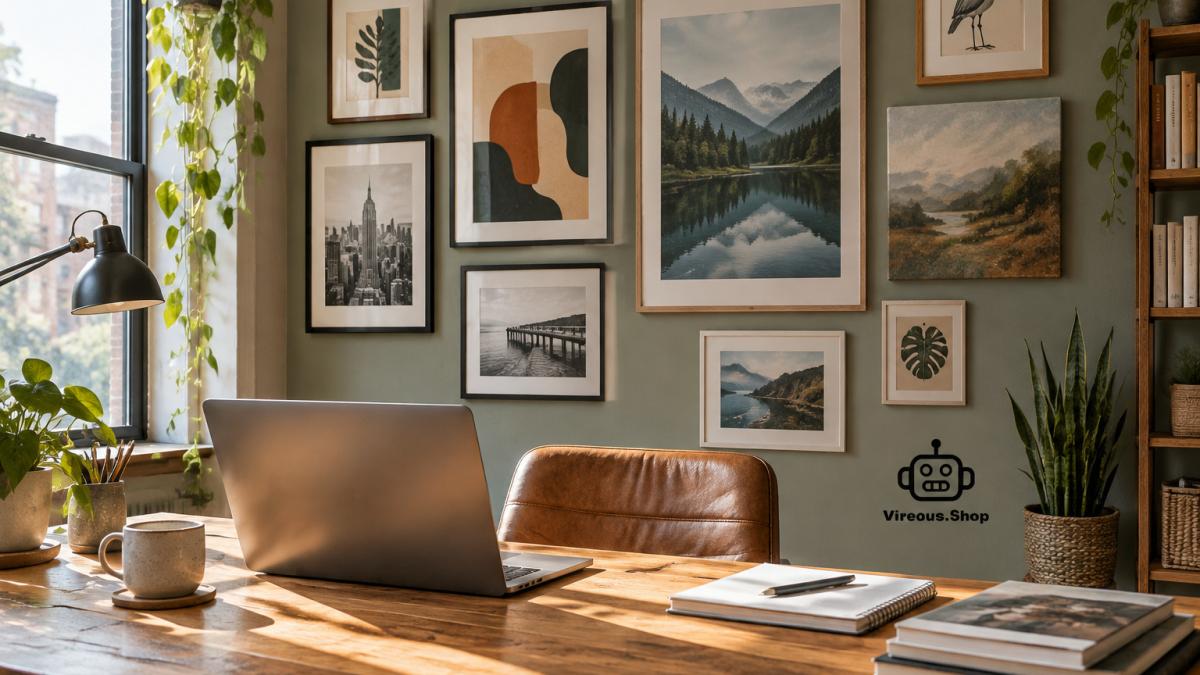 Curated gallery wall of framed prints above a sunny wooden desk in a home studio
Mixing canvas and framed prints can work well if the colours connect. A surreal canvas beside a framed geometric print with the same palette looks deliberate, while random styles look cluttered.
Start Your Creative Wall Collection Today
Choosing the right wall art themes takes a little planning, but the payoff is a workspace that supports your ideas every day. Start with one anchor piece that matches the work you do, measure the space, and build from there. At Vireous.Shop, we make it easy to find pieces in abstract, surreal and figurative themes, with fast dispatch on personalised items and a Money Back Guarantee on your order.
Frequently Asked Questions
What are some creative wall theme ideas for a workspace?
Abstract compositions with bold color blocks, surreal figurative pieces, and minimalist geometric prints all work well in creative spaces. Abstract art tends to energize a room, while muted geometric prints support focus during long editing or drafting sessions. Mixing one statement piece with calmer supporting prints keeps the wall interesting without competing with your work. Vireous.Shop's Blue Abstract Balloon Trees canvas, starting at $34.99, is a strong example of an abstract piece that adds movement to a studio wall.
What is the 2/3 rule for wall art?
The 2/3 rule suggests that a piece of wall art should span about two-thirds of the width of the furniture beneath it, such as a desk, sofa, or console. This proportion keeps the artwork from looking lost or overwhelming the furniture. For a desk that is 60 inches wide, a print around 40 inches across usually looks balanced. Measure your furniture before buying, then compare the scale to the available sizes of your chosen print.
How do you choose wall art for a creative office?
Start with the mood you want the room to carry, then narrow by color palette and subject matter. Decide whether you need energy for brainstorming or calm for detailed work, and choose pieces that match. Consider the lighting, wall color, and existing decor so the art complements rather than clashes. Test placement with painter's tape before hanging anything permanently, and prioritize one focal piece above your main workspace.
What types of art can make a workspace feel more inspiring?
Art with strong visual narratives, such as surreal figurative work or expressive portraits, tends to prompt conversation and curiosity during breaks. Abstract pieces with vivid colors can help reset attention during a slump. Choosing art that reflects your own creative interests, rather than generic decor, makes the space feel personal. The Dreamy Surrealist Woman with Cloud TV canvas, starting at $24.89, is an example of work that invites a second look.