

Table of Contents
- What AI-Generated Wall Art Actually Is
- How AI Art Generation Works for Home Decor
- AI Art vs Traditional Art for Home Decor
- Best AI Tools for Custom Home Decor
- Tips for Prompting AI Art for Wall Decor
- Customization, Personalization, and Interior Design Integration
- Pros and Cons of AI-Generated Wall Art
- Conclusion
Last Updated: August 20, 2026
What AI-Generated Wall Art Actually Is
AI-generated wall art is digital artwork created by machine learning algorithms that interpret natural language descriptions and transform them into unique visual compositions. Unlike traditional art created by human hands, these pieces emerge from generative models trained on vast datasets of images, learning patterns and styles to produce entirely new works on command.
At Vireous.Shop, we've made this process accessible to creators, homeowners, and gift-givers who want one-of-a-kind pieces without waiting weeks for a custom commission. You describe what you envision, a serene forest at sunset, an abstract geometric pattern, a portrait in a specific artistic style, and the AI generates multiple variations. You choose your favorite, and we print it on premium canvas, framed prints, or other materials with same-day or next-day dispatch.
What makes this different from stock art or mass-produced prints is the personalization layer. Every piece is generated specifically from your prompt, meaning your wall art is genuinely unique. Two people could describe similar scenes, but the AI will produce different compositions, color palettes, and details based on the nuances of their descriptions.

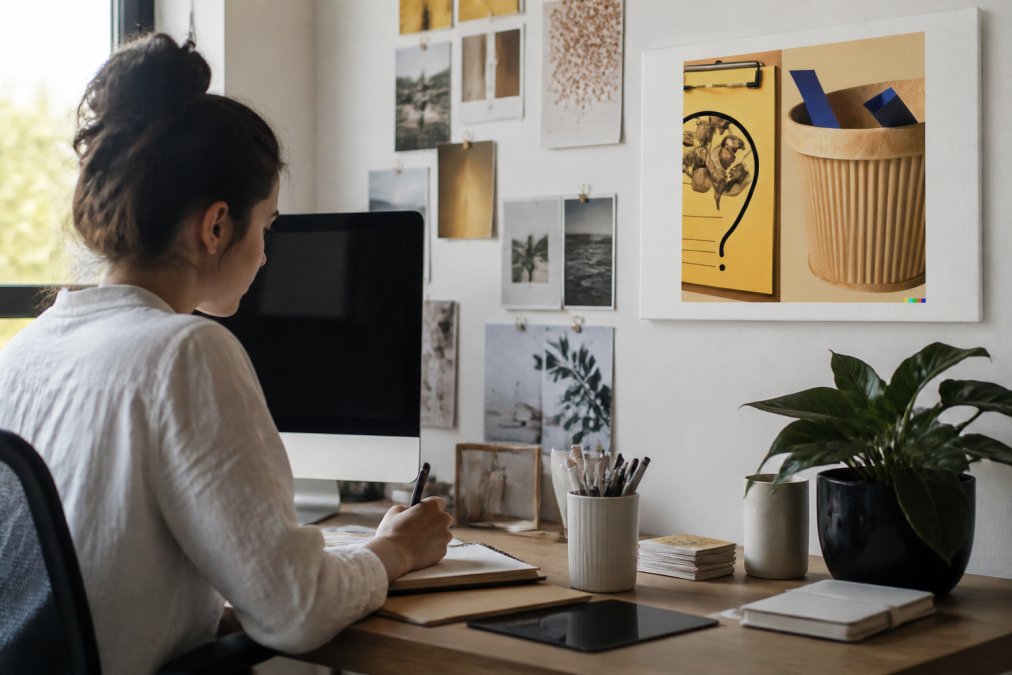
How AI Art Generation Works for Home Decor
The technology behind AI art generation relies on diffusion models and neural networks that have learned the visual language of millions of images. When you enter a text prompt, the algorithm doesn't search a database, it generates a brand-new image pixel by pixel, guided by your description and trained on patterns it learned during its training phase.
Here's the practical workflow: You write a detailed prompt describing your desired artwork. The system processes your text through a language model that understands context and artistic vocabulary. Then the generative model creates multiple candidate images based on your prompt. You review the variations and select the one that best matches your vision. Once approved, the image is rendered at high resolution and sent to print production.
The quality of your output depends heavily on prompt clarity. Vague descriptions produce vague results. Specific prompts, mentioning color schemes, artistic styles, composition details, and mood, generate more predictable and satisfying artwork. This is why prompt engineering has become a skill in itself for people serious about AI-generated wall art.
The resolution matters for wall decor. Most AI models generate images at standard sizes, but high-quality printing requires scaling to the dimensions you need. The best platforms, including Vireous.Shop, handle upscaling intelligently so your final print maintains sharpness and detail even on large canvases.
AI Art vs Traditional Art for Home Decor
The comparison between AI-generated wall art and traditional art isn't about replacing human creativity, it's about different use cases and timelines. Traditional commissioned art offers irreplaceable human judgment, emotional depth, and the artist's unique perspective developed over years of practice. A commissioned portrait from a skilled painter carries authenticity that algorithms cannot replicate.
AI-generated wall art wins on speed, cost, and iteration. You can generate dozens of variations in minutes and test different aesthetic directions before committing to a print. Traditional commissions take weeks or months and require significant upfront investment. If you change your mind halfway through, you've already paid for work you won't use.
For interior design matching, AI art offers flexibility that traditional pieces can't match. Need a piece that fits a specific color palette or complements an existing room layout? Generate options until you find the perfect fit. With traditional art, you're limited to what's available or what a single artist can create within your budget.
The aesthetic quality has improved dramatically. Early AI art looked clearly algorithmic, uncanny proportions, weird hands, inconsistent lighting. Current models produce work that's visually compelling and suitable for professional home decor. Some pieces rival stock photography in polish; others have a distinctive digital aesthetic that appeals to modern design sensibilities.
The real difference comes down to intent. Choose traditional art when you want human vision and craftsmanship. Choose AI-generated wall art when you want personalized, rapid iteration and specific customization for your space.
Best AI Tools for Custom Home Decor
When selecting an AI tool for wall art, you're evaluating three core dimensions: the quality of the generative model, the ease of the user interface, and the printing and fulfillment capabilities.
Vireous.Shop integrates OpenAI's DALL-E 3 API, which is currently among the most capable text-to-image models available. DALL-E 3 understands nuanced prompts and produces high-resolution, aesthetically polished results. The platform combines this with a user-friendly design interface, allowing you to write prompts in plain language without technical jargon.
The advantage of using a dedicated print-on-demand platform like Vireous.Shop rather than generating images separately and printing elsewhere is integration. You generate, preview, refine, and order all in one workflow. There's no exporting files, searching for print vendors, or managing separate accounts. Same-day or next-day dispatch means your custom wall art arrives quickly, critical if you're decorating for an event or need a gift fast.
Other approaches involve using standalone AI image generators (like Midjourney or Stable Diffusion) and then uploading your generated image to a print service. This works but adds friction: you're managing two platforms, two accounts, and potential compatibility issues. For creators who generate frequently or want seamless integration with their creative workflow, dedicated platforms eliminate that overhead.
The quality difference between models is real but narrowing. DALL-E 3 tends to handle complex prompts and specific artistic styles more reliably. Midjourney excels at stylized, artistic interpretations. Stable Diffusion offers flexibility and local control. For wall art specifically, you want a model that produces print-ready resolution and maintains visual coherence across large formats, where DALL-E 3 and Midjourney both perform well.
Tips for Prompting AI Art for Wall Decor
Prompt engineering is the skill that separates mediocre AI art from compelling pieces. A weak prompt produces weak results; a thoughtful prompt produces work you'll actually want to hang.
Start with your core concept. Instead of "a landscape," write "a misty mountain valley at dawn with golden light breaking through pine trees." The specificity matters. Include the time of day, weather conditions, and lighting direction. These details guide the model toward a cohesive vision rather than a generic interpretation.
Specify artistic style explicitly. "In the style of watercolor impressionism," "digital art with bold geometric shapes," "photorealistic with dramatic lighting," or "abstract expressionism with warm earth tones" all give the model concrete visual references. You're not asking it to guess your aesthetic, you're describing it clearly.
Composition guidance helps too. "Wide panoramic format with a horizon line in the lower third," "centered subject with symmetrical framing," or "rule of thirds composition with foreground detail" all shape how the AI structures the image. For wall art, composition affects how the piece works in your space.
Color palette specification is crucial for interior design matching. "Dominated by jewel tones, emerald, sapphire, and amethyst," "warm neutrals with terracotta accents," or "monochromatic blues with white highlights" ensures your generated art complements your room. This is where AI art becomes a tool for interior design rather than just decoration.
Describe mood and emotion. "Serene and contemplative," "energetic and playful," "dramatic and moody," or "peaceful and meditative" guide the model toward the emotional register you're targeting. The same subject rendered with different moods produces entirely different pieces.
Test and iterate. Generate multiple variations with slight prompt modifications. See what the model emphasizes and what it misses. Refine your language based on results. After a few iterations, you'll develop intuition for which prompt elements produce the outcomes you want.
Customization, Personalization, and Interior Design Integration
The real power of AI-generated wall art emerges when you treat it as a tool for interior design rather than just decoration. You're not choosing from a catalog of pre-made options, you're describing exactly what your space needs.
Start with your room's dominant colors and style. If you have a minimalist Scandinavian interior, describe that aesthetic in your prompt. "Minimalist Scandinavian art with clean lines, neutral palette of whites and warm grays, geometric shapes with subtle texture." The AI will generate pieces that genuinely complement your existing furniture and décor rather than clash with it.
Consider the wall's dimensions and the furniture it's above. A piece above a sofa needs different proportions and visual weight than a piece in a hallway. Specify these constraints: "Horizontal landscape format, 48 inches wide, designed to anchor a living room sofa, with balanced composition that doesn't demand constant attention." The AI understands spatial relationships and will generate accordingly.
Personalization goes beyond aesthetics. Include meaningful elements. If you love hiking, ask for "mountain landscape with specific peaks I recognize, rendered in a style that feels personal and adventurous." If you're creating a gift for someone, describe their interests and personality: "Abstract art reflecting a love of music and movement, incorporating musical elements subtly, rendered in bold energetic colors." The AI can weave these details into coherent, unique pieces.
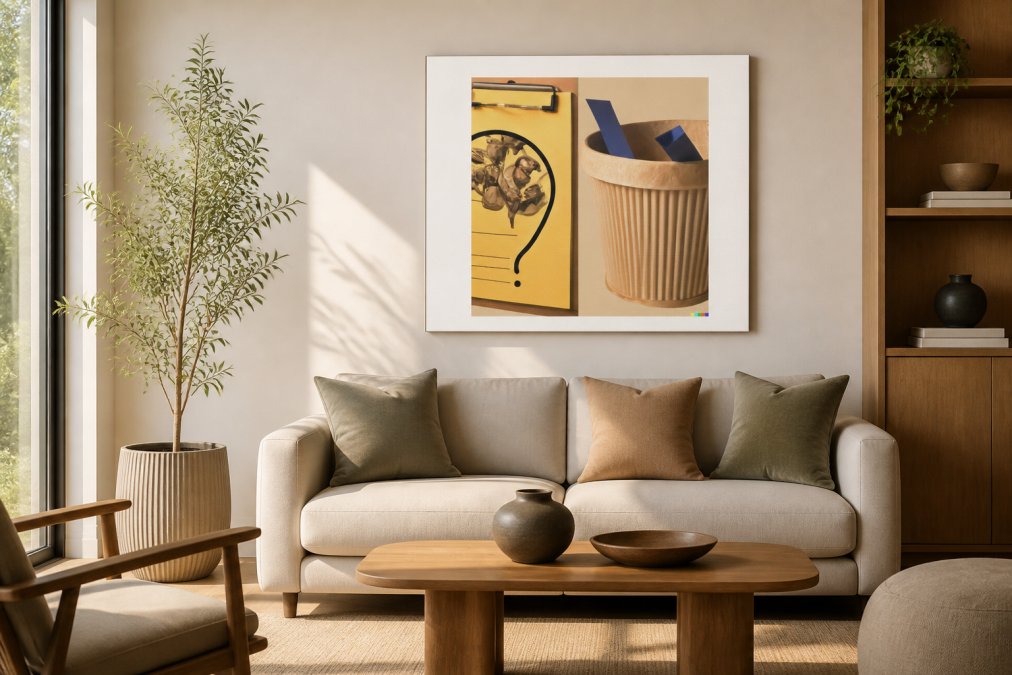
Vireous.Shop's integration with OpenAI's technology means you can be this specific in your prompts and expect reliable results. The platform also allows you to save successful prompts and generate variations, so you can build a collection of pieces that work together cohesively across multiple rooms.
For creators and influencers, this customization capability extends to branded spaces. You can generate art that reflects your creative aesthetic and use it in your home office, studio, or content backgrounds. The pieces are genuinely yours, no one else will have the same combination of prompt and generated output.
Pros and Cons of AI-Generated Wall Art
Pros:
Speed and iteration are the most obvious advantages. You can generate dozens of variations in an afternoon. Traditional commissions take weeks; AI art takes minutes. If you're indecisive or like experimenting with different aesthetics, this flexibility is invaluable.
Cost-effectiveness matters, especially for large pieces or multiple artworks. AI-generated art costs a fraction of commissioned work. Vireous.Shop's pricing makes it accessible for people decorating entire rooms or creating gift sets without breaking their budget. You're paying for the print and fulfillment, not artist labor.
Unlimited customization means you're never compromising on aesthetic fit. You're not choosing between options someone else created, you're describing exactly what you want and getting it. This is especially powerful for interior design matching or creating pieces that reflect your specific personality and interests.
Novelty and uniqueness appeal to people who want their spaces to feel personal. Your AI-generated wall art is genuinely one-of-a-kind. No one else has the same piece unless they used the exact same prompt.
Fast turnaround through platforms like Vireous.Shop means you can go from idea to physical print in 24 hours. This is critical for last-minute decorating, gifts, or content creation timelines.
Cons:
The "algorithmic look" still appears in some pieces, especially with complex or unusual prompts. AI models sometimes struggle with specific details like hands, text, or intricate patterns. You might generate 20 variations before finding one that's genuinely print-worthy.
Copyright and ethical questions linger. The models were trained on existing artwork, raising questions about whether generated pieces truly represent original creation or derivative work. This matters if you're concerned about supporting human artists or if you plan to use the art commercially.
Print quality depends on upscaling. AI models generate at standard resolutions, and enlarging them to wall-size requires intelligent upscaling. Poor upscaling produces blurry or pixelated results. Reputable platforms like Vireous.Shop handle this well, but it's a variable to monitor.
Limited artistic depth is a real limitation for some buyers. AI art can be visually striking, but it lacks the intentional brushwork, compositional mastery, and emotional nuance that comes from years of human artistic training. If you're seeking art as an investment or for deep emotional resonance, human-created pieces still win.
Prompt fatigue is real. Getting good results requires learning prompt engineering and iterating multiple times. For people who just want to buy art and hang it, this extra step is friction rather than a feature.
Material and framing choices affect the final impact. AI art on cheap paper or with poor framing looks cheap. Vireous.Shop's premium canvas and wooden frames elevate the presentation, but material choices still matter significantly.
Conclusion
AI-generated wall art represents a genuine shift in how people approach home decoration and creative expression. It's not about replacing human artists, it's about democratizing customization and speed. You can now describe your vision and have it rendered as a physical print in your home within 24 hours, something that was impossible five years ago.
If you're ready to explore this capability, Vireous.Shop combines OpenAI's DALL-E 3 technology with seamless print fulfillment. Write your prompt, generate variations, select your favorite, and receive a premium canvas or framed print with same-day or next-day dispatch. The Money Back Guarantee means you can experiment without risk. Whether you're decorating a room, creating branded content, or finding a truly unique gift, AI-generated wall art gives you control over the final result that traditional options simply can't match.
Frequently Asked Questions
What are the main benefits of choosing AI-generated wall art over traditional prints?
AI-generated wall art offers unlimited unique imagery tailored to your exact vision, faster production times, and lower costs compared to commissioning original artwork from artists. You can generate dozens of variations instantly, customize colors and composition to match your interior design, and receive high-resolution prints ready for display. Unlike mass-produced wall decor, each piece is one-of-a-kind and created specifically for your space.
How do I write effective prompts for AI art that will actually look good on my wall?
Start with specific visual references: describe the mood (serene, energetic, moody), artistic style (abstract, photorealistic, watercolor), color palette, and composition. Include details like 'sunset over mountains in warm oranges and purples' rather than just 'landscape.' Test multiple variations and refine based on results. Look at reference images in your desired style, mention specific art movements or artists whose work inspires you, and specify resolution requirements for wall display. The more detailed your description, the closer the output matches your vision.
Is AI-generated wall art considered real art, and does it work well for home decor?
AI-generated art is a legitimate form of artistic expression that combines human creativity (through prompts and curation) with algorithmic image synthesis. For home decor, it works exceptionally well because you control every aspect: color, composition, size, and subject matter. High-resolution AI art prints on quality materials like satin canvas or matte paper look professional and gallery-ready. The key difference from traditional art is speed and personalization, you're not limited to what exists; you create exactly what your space needs.
How does the cost of AI-generated wall art compare to buying traditional artist prints?
AI-generated wall art is significantly more cost-effective. A custom canvas print starts at $23.20, while a framed poster runs $50.12, far below the typical $100-$500+ price for original artist commissions or limited-edition prints. You also save on shipping delays since AI art generates instantly and can be printed and dispatched same-day or next-day. The trade-off is that AI art lacks the hand-crafted authenticity of original paintings, but for personalized home decor, the speed, affordability, and customization options make it an excellent value.
This article was written using GrandRanker