Quick Summary
A merch drop is a short window in which a limited set of products goes on sale, then closes. Creators plan one by picking a single concept, choosing three to five products, setting quantities from the smallest realistic audience, and announcing a firm closing date.
- Scarcity works because fans know the item will not return, so they decide faster.
- Choose three to five products to keep decisions simple for you and your buyers.
- Order quantities from the smallest realistic audience, plus a buffer of roughly 10 to 15 percent.
- Order samples early and check print quality and fit before placing the production order.
- Confirm the production ship-by date before announcing the launch date.
Ready to launch your own merch drop?Vireous.Shop helps creators produce personalised, limited-run apparel with fast dispatch.
Explore the Drop Range
Table of Contents
Tips for Launching a Limited Edition Merch Drop
Last Updated: November 16, 2026
Limited edition merch can turn a casual audience into buyers within a single week. Creators who run these drops well treat them as a small product launch rather than a quick sale. A clear concept, a short product list and a firm end date give fans a reason to act now. This guide walks through each stage, from picking a concept to writing the announcement, so you can plan your own drop with confidence.
Why a Limited Edition Merch Drop Works for Creators
A merch drop is a short window in which a limited set of products goes on sale, then closes. The scarcity is the point. When fans know an item will not return, they decide faster and feel more connected to the creator behind it.
Creators have an advantage here because their audience already follows them. A drop gives that audience a reason to visit, buy and talk about the release. It also gives you a clear way to measure demand before you commit to a larger catalogue.
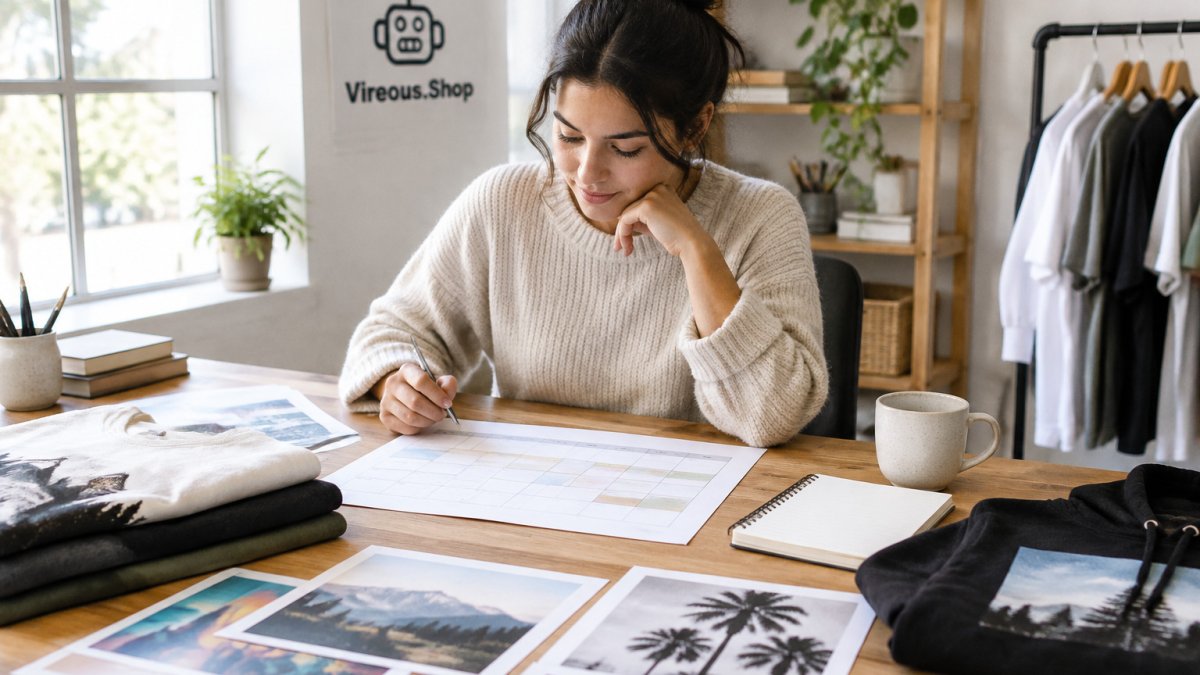 Creator reviewing a printed launch calendar and product samples on a desk in a bright home studio
Choosing a Concept and Matching It to Your Audience
Start with one idea that fits who you are and what your followers already respond to. A concept might be an inside joke from your videos, a catchphrase, or a visual style your audience recognises. Keep it narrow. A single strong theme is easier to explain and easier to remember than a mix of unrelated designs.
Test the concept against your audience before you build anything. Look at which posts drew the most comments and which phrases people repeat back to you. Those signals show what fans will buy.
Selecting Products, Quantities and Unit Economics
Choose a small range of products. Three to five items is enough for most first drops and keeps decisions simple for both you and your buyers. Our current range includes the I'm Not Perfect But I'm Limited Edition Unisex Jersey T-Shirt at $21.43, the I'm A Limited Edition Kids Heavy Cotton T-Shirt at $14.76, and the Sharp Tooth Design Black Hoodie at $26.90. Each one gives you a different price point to offer within the same drop.
Before you set prices, work out your unit economics. Start with the landed cost of one unit: the blank or printed product cost, plus inbound freight, plus any packaging you add. Add the per-order costs that scale with each sale, such as payment processing (most processors charge a percentage plus a fixed per-transaction fee) and outbound shipping if you absorb it. Subtract those from your retail price to get contribution margin per unit.
Then calculate break-even quantity. Add your fixed costs for the drop, design time, sample orders, ad spend, and any platform or setup fees, and divide by contribution margin per unit. If that number is higher than the realistic number of buyers in your audience, you have three levers: raise the price, cut the fixed costs, or reduce the range so fewer designs carry the fixed-cost burden. A common pattern is that creators underprice the first drop because they forget payment fees and shipping subsidies, then discover the margin only after the run sells out.
Quantity is the decision that carries the most risk. Order too few and you sell out quickly, which is good for hype but leaves fans disappointed. Order too many and you carry unsold stock. Base the number on the smallest audience you can reasonably expect to buy, often a low single-digit percentage of your engaged followers, then add a modest buffer of roughly 10 to 15 percent for replacements and late demand. If your supplier enforces a minimum order quantity above that figure, compare the cost of holding the extra units against the cost of a second, smaller run later.
Building a Merch Drop Timeline, Week by Week
A workable timeline runs for about six weeks. The version below assigns a channel and an owner to each task so the plan is executable rather than aspirational.
Week 1, Concept and product selection. Lock the theme, shortlist three to five products, and confirm retail prices using the unit economics from the previous section. Owner: creator. Channel: internal planning doc.
Week 2, Design approval and sample ordering. Finalize artwork, order samples, and confirm the supplier's production lead time and minimum order quantity in writing. Owner: designer or supplier contact. Channel: email with the supplier.
Week 3, Sample review and production order. Check print quality, fit, and color accuracy against the approved design. Place the production order only after samples pass. Owner: creator. Channel: supplier portal or email.
Week 4, Teaser campaign and product page build. Post two or three teasers on your main social channels, build the product page with sizes, materials, shipping windows, and the closing date, and set up an email signup for drop reminders. Owner: creator and whoever manages the store. Channel: social, email, and the store.
Week 5, Announcement and order opening. Publish the announcement across every main channel on the same day, send the first email to your list, and open orders. Owner: creator. Channel: social, email, and the store.
Week 6, Close, fulfillment, and review. Send one reminder before the window closes, close orders on the stated date, ship within the promised window, and review sell-through, conversion rate, and average order value. Owner: creator and fulfillment partner. Channel: email and the store dashboard.
Mark each task on a shared calendar with a named owner. Ordering samples early is the step most creators skip, and it is the one that prevents the most returns later.
Build in contingency time rather than assuming everything runs on schedule. Production delays are common when a supplier batches your order with others, so confirm the ship-by date in writing and keep a buffer before your announced launch. If a defect appears in the sample run, reorder before you promote the drop rather than after orders open. If shipping disruptions threaten the delivery window, tell buyers early with a revised date instead of letting the silence do the talking.
Watch out: announcing a launch date before the production ship-by date is confirmed is the most common cause of a drop that opens late and loses the urgency it was built on.
Writing a Merch Drop Announcement That Creates Urgency
Your announcement should state the product, the price, the quantity and the closing date in the first few lines. Urgency comes from clarity. Tell fans exactly when the drop closes and what happens after, such as the item never being restocked.
Keep the message short and personal. Speak to fans the way you speak in your videos. Post the announcement across your main channels on the same day, and follow up once before the drop closes with a reminder that the window is nearly over.
"Once it's gone, it's gone. This is the only run."
Limited-Edition Merch Ideas to Build Your Drop Around
Several formats work well for a first drop. A slogan tee built around a phrase your audience already uses is the simplest option. The I'm A Limited Edition Kids Heavy Cotton T-Shirt shows how a "limited edition" line can be applied to a children's range for family audiences. The I'm Not Perfect But I'm Limited Edition Unisex Jersey T-Shirt works as a broader everyday piece, and the Sharp Tooth Design Black Hoodie gives you a heavier, higher-price option for colder seasons.
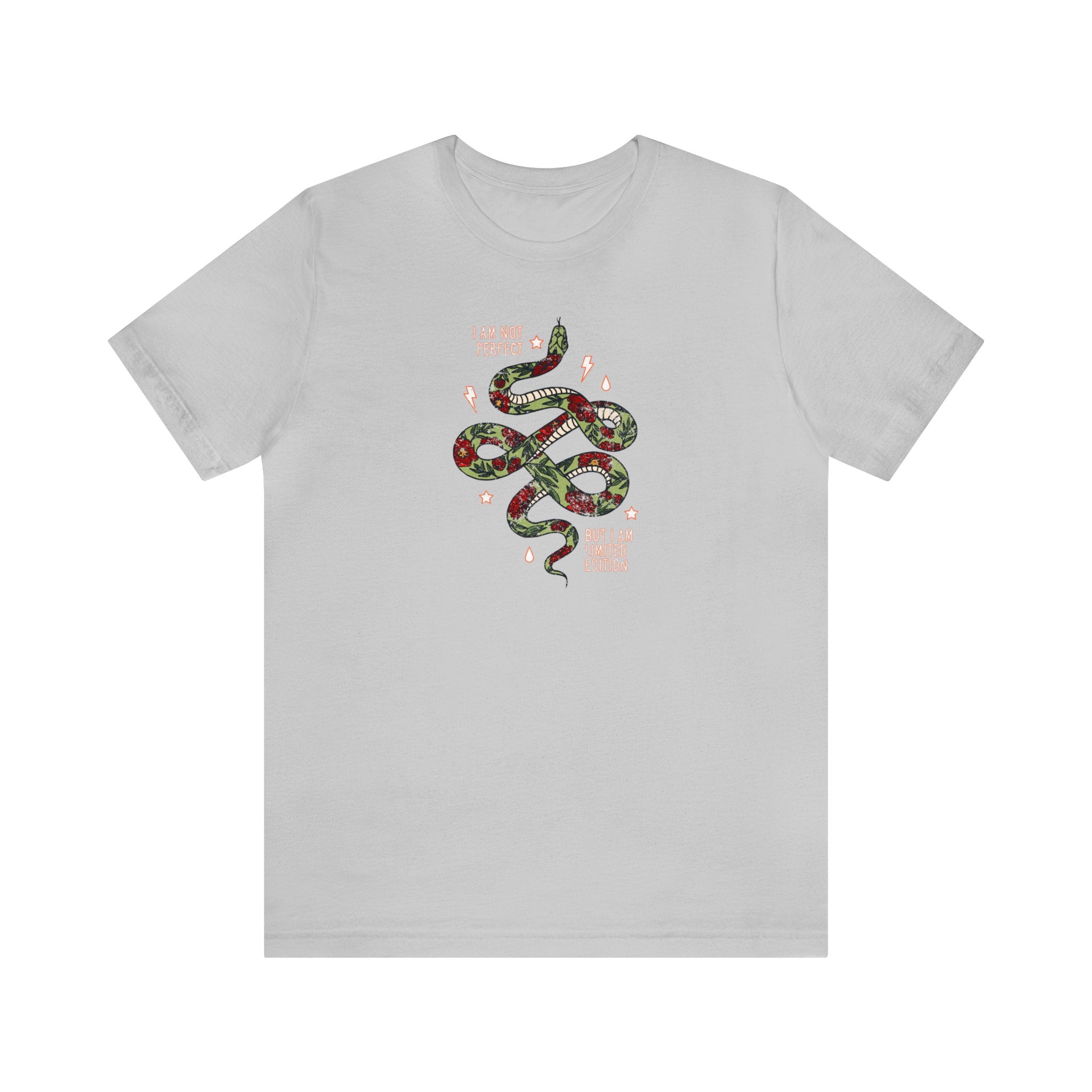 I'm Not Perfect But I'm Limited Edition, Unisex Jersey T-Shirt
Pairing a tee with a hoodie in the same colourway lets fans buy a set, which can lift the average order value without adding a new design to produce.
Your Merch Launch Checklist and Next Step
Use this checklist before you open orders:
When you are ready to build your range, explore the products on Vireous.Shop and choose the pieces that suit your concept. Start your first limited edition drop with Vireous.Shop and give your audience something they will not see again.
Frequently Asked Questions
What kind of merch sells the most?
Simple, wearable pieces with a clear identity usually sell best for creators. Tees and hoodies are the most common starting points because fans buy them to show support, and they are easy to size and style. Vireous.Shop's Sharp Tooth Design Black Hoodie starts at $26.90, and the I'm Not Perfect But I'm Limited Edition Unisex Jersey T-Shirt starts at $21.43. Start with one or two core pieces, watch which designs get the most response from your audience, and build the next drop around what they actually want.
How far in advance should you promote a merch drop?
Most creators tease a limited-edition drop one to two weeks before it opens, then announce the date and product details a few days ahead. A short teaser period builds anticipation without letting fans lose interest. Plan at least three announcement touchpoints, such as a social post, an email to your list and a reminder on launch day, so people who miss one still see the drop.
How do you create urgency for a limited-edition product drop?
Be honest about the quantity and the deadline. State how many units exist and when the drop closes, then tell fans clearly when it will not return. Showing the drop's theme and design in advance helps people decide quickly once it opens. Avoid fake countdowns or invented scarcity, because fans notice quickly and trust is hard to rebuild.
What should you include in a merch launch plan?
A useful merch launch plan lists the drop theme, the products and sizes, the quantity for each item, the launch date, the announcement schedule, the pricing and the fulfillment method. It should also set a target for sell-through and a date to review results. Vireous.Shop offers same-day or next-day dispatch for personalized items, which helps you set realistic shipping dates in your announcements.