Last Updated: October 27, 2026
Quick Summary
The best breathable fabrics for custom printed sportswear are polyester and polyester-spandex knits, because they wick moisture, dry fast and take sublimation prints cleanly. A 140-180 GSM polyester-spandex knit decorated with sublimation is the safest default. Cotton, linen, rayon and bamboo breathe but hold sweat and limit print options.
- Air permeability is measured in CFM, and open knits test higher than tight jersey knits of the same fiber.
- Polyester wins for most custom printed sportswear because it takes sublimation ink cleanly and dries fast.
- High-sweat sports suit polyester or polyester-spandex knits in the 120-160 GSM range with mesh zones.
- Sublimation requires 65% or higher polyester and is not suitable for cotton, linen or bamboo.
- Two polyester knits with identical fiber content can differ by 2x in air permeability due to knit structure.
Table of Contents
What Makes a Fabric Breathable for Custom Printed Sportswear?
Breathable fabrics move moisture vapor away from the body and let air pass through, keeping the wearer cooler during exertion. For custom printed sportswear, breathability and print performance pull in opposite directions, and that tension decides which fabric you choose.
Airflow, moisture-wicking and quick-drying explained
Three separate properties get lumped together as "breathability."
-
Airflow is how easily air passes through the weave or knit. Open knits, mesh panels and looser constructions let heat escape.
-
Moisture-wicking is how a fiber pulls sweat off the skin and spreads it across the surface so it evaporates faster. Synthetic filaments do this well; cotton absorbs and holds.
-
Quick-drying is how fast the fabric releases that moisture once it is wet. Polyester and nylon dry quickly; heavy cotton and rayon lag behind.
A fabric can wick well and still feel clammy if it dries slowly, so judge all three together.
Most fabric roundups stop at "breathable" and "not breathable." The table below adds objective performance criteria you can ask a supplier about.
-
Air permeability is measured in cubic feet per minute (CFM) under a standard pressure differential. Higher CFM means more airflow; open knits and mesh zones test higher than tight jersey knits of the same fiber.
-
Moisture-vapor transmission rate (MVTR) describes how much water vapor passes through the fabric in a set time, the best single proxy for letting sweat vapor escape.
-
Drying time is how long a saturated swatch takes to return to its dry weight. Synthetics usually dry faster than cellulosics.
-
Fabric weight is expressed in grams per square meter (GSM) or ounces per square yard (oz/yd²). Lighter fabrics breathe better but cling when wet; heavier fabrics resist cling but trap more heat.
Fabric comparison matrix
| Fabric |
Breathability profile |
Moisture handling |
Print compatibility |
Best for |
Watch-outs |
| Polyester (open knit) |
High airflow; high MVTR |
Wicks and dries fast |
Sublimation (excellent), DTG with pretreatment (good), screen print with plastisol (fair) |
All-over prints, jerseys, training tees |
Can retain odor; requires odor-control finish for heavy use |
| Polyester-spandex |
High, plus four-way stretch |
Wicks well; recovers shape |
Sublimation (excellent), heat transfer (good) |
Leggings, fitted tops, compression |
Stretch demands stretch-compatible decoration |
| Nylon |
Moderate to high |
Wicks well; durable |
Sublimation (good with process control), screen print (fair) |
Compression wear, outer layers |
Narrower decoration window; higher cost |
| Ring-spun cotton |
Moderate airflow; lower MVTR |
Absorbs and holds moisture; slow drying |
Screen print (excellent), DTG (good), heat transfer (fair) |
Casual tees, low-sweat wear |
Poor sweat management; heavy when wet |
| Linen |
Very high airflow |
Absorbs and dries faster than cotton |
Screen print (fair; texture interferes), DTG (fair) |
Hot-weather casual |
Wrinkles; limited fine detail |
| Rayon |
Moderate |
Absorbs; weak when wet |
Sublimation on blends (good), screen print (fair) |
Drapey tops |
Loses strength wet; needs care |
| Bamboo fiber |
Moderate |
Absorbs well; soft hand |
Screen print (fair), DTG (fair) |
Soft loungewear |
Print results vary; test first |
| Modal |
Moderate |
Absorbs; smooth |
Screen print (good), DTG (fair to good) |
Soft base layers |
Can pill; slower drying than synthetics |
Print-method compatibility by fabric
| Fabric |
Sublimation |
Screen print |
Direct-to-garment (DTG) |
Heat transfer |
| Polyester (high, 65%+) |
Excellent |
Fair (plastisol can crack on stretch) |
Good with pretreatment |
Good |
| Polyester-spandex |
Excellent |
Fair; use stretch additives |
Good with pretreatment |
Good |
| Nylon |
Good with process control |
Fair |
Fair |
Fair |
| Ring-spun cotton |
Not suitable |
Excellent |
Good |
Fair |
| Linen |
Not suitable |
Fair |
Fair |
Fair |
| Rayon |
Good on blends |
Fair |
Fair |
Fair |
| Bamboo |
Not suitable |
Fair |
Fair |
Fair |
| Modal |
Good on blends |
Good |
Fair to good |
Fair |
What the table does not tell you
Fiber content is only half the story. Two polyester knits with identical fiber percentages can differ by 2x in air permeability because of knit structure, yarn denier, and finishing. Evaluate the finished fabric, not the fiber label.
Polyester vs Nylon Sportswear: Which Base Fabric Wins?
Polyester wins for most custom printed sportswear because it takes sublimation ink cleanly and dries fast. Nylon is better for abrasion resistance and a cooler, slicker hand feel. Both beat cotton for sweat management, but they behave differently under a print head.
Polyester-spandex blends and stretch
Adding spandex to polyester gives you four-way stretch, which changes what a print can do.
Our Women's Padded Four Seasons Sports Bra, Neon Colours uses an 85% polyester, 15% spandex blend with ventilation panels and wide double-layer shoulder straps.
Women's Padded Four Seasons Sports Bra, Neon Colours →
 Women's Padded Four Seasons Sports Bra, Neon Colours
The Best Fabric for Moisture-Wicking Shirts and Workout Clothing
If you are shopping for finished pieces rather than blanks, our yoga sports shorts show how a moisture-wicking knit performs in a real cut: synthetic filament plus open knit equals a shirt you can train in.
Sublimation Fabric for Sportswear: What Prints Cleanly and Lasts
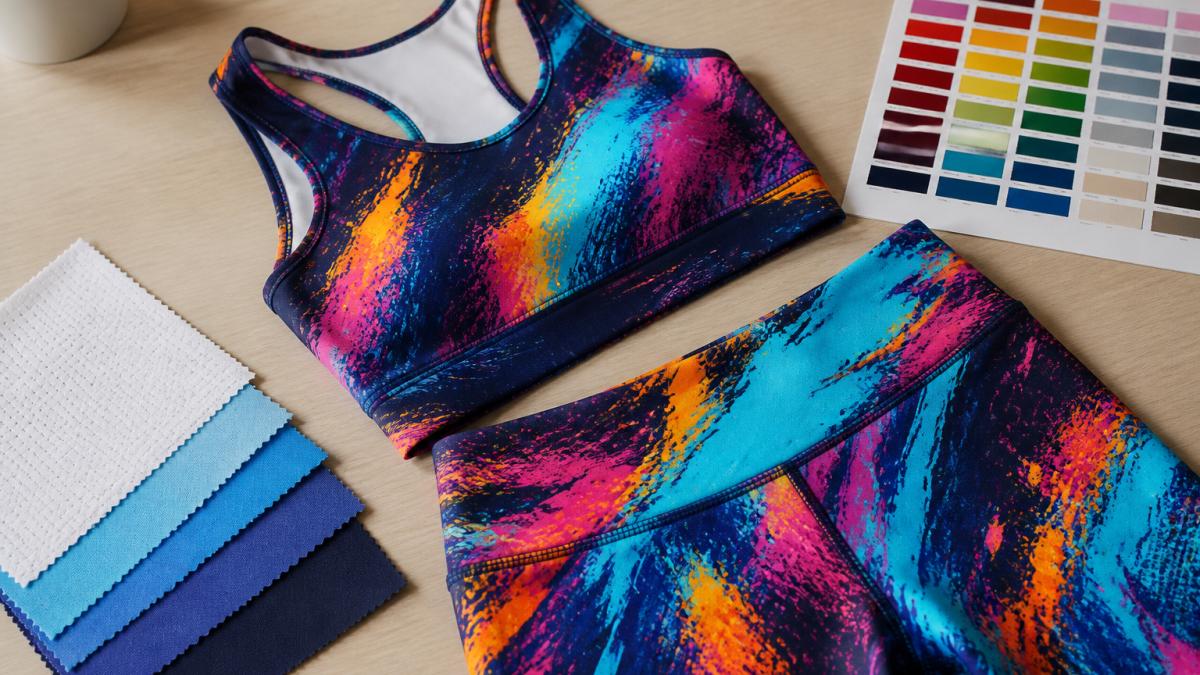 Infographic showing the sublimation printing process on polyester-spandex sportswear with color swatches
If you want to go deeper on which blanks take decoration cleanly, our guide to the best fabrics for rush custom screen printing covers the fabric side in more detail.
Cotton, Linen, Rayon and Bamboo: Natural Fibers Under Pressure
For a breathable natural-fiber look in everyday wear, our men's breathable casual pants show where linen-style comfort fits without pretending to be a performance jersey. Match the fabric to the job.
Construction Details That Decide Breathability and Comfort
Construction decides whether breathable fabrics actually breathe. Two shirts can use identical polyester and feel completely different because of how they are built.
-
Lining and padding: a built-in bra or padded panel adds support but can trap heat if it is not ventilated.
-
Strap design: wide, double-layer straps spread pressure and improve airflow across the chest.
Match Fabric to Sport, Climate and Print Method
The right fabric depends on three variables: the sport, the climate, and the decoration method. For a closer look at decoration options, see our article on custom apparel printing methods for quick delivery. The recommendations below add fabric weight ranges, construction cues, and print-method trade-offs.
By sport
-
High-sweat sports (running, cycling, HIIT): Choose a polyester or polyester-spandex knit in the 120-160 GSM range with mesh zones under the arms and down the back. Sublimation is the default for all-over graphics because it adds no weight and does not block airflow. Plastisol screen print is a poor fit: heavy ink reduces airflow and cracks when the garment stretches.
-
Low-sweat sports (yoga, pilates): A softer polyester-spandex or modal blend in the 180-220 GSM range gives better hand feel and opacity. Prioritize stretch and recovery over maximum airflow. Sublimation on high-polyester blends works well; DTG with pretreatment suits small graphics but adds a stiffer hand.
-
Team sports (soccer, basketball, lacrosse): Jerseys need durability plus airflow. Look for polyester interlock or pique knits with mesh side panels. Sublimation handles names and numbers cleanly and stretches with the garment. Screen print is common for club-level kits but can feel heavy on lightweight jerseys.
-
Racket sports (tennis, pickleball): Polyester-spandex with four-way stretch and a smooth face for sublimation. Avoid cotton blends, which hold sweat and get heavy.
-
Strength training and CrossFit: A slightly heavier polyester-spandex (200-240 GSM) resists abrasion from bars and ropes while still wicking. Sublimation is preferable to heat transfer, which can peel under repeated friction.
By climate
-
Hot and humid: Open knits, light weights (under 160 GSM), and mesh zones. Linen is a strong casual option but a poor performance choice because it wrinkles and offers limited print detail. Avoid heavy cotton entirely.
-
Hot and dry: Breathability matters less than sun protection and moisture management. A tighter polyester knit with UPF treatment and good MVTR keeps you cooler than an open knit that lets radiant heat in.
-
Cold: A thicker performance knit (220-280 GSM) with a brushed backer still wicks but traps warmth. Sublimation works, but check that the brushed surface does not blur fine detail. Layering pieces should use smooth-face polyester.
-
Variable or indoor/outdoor: A mid-weight polyester-spandex (180-220 GSM) with mesh zones balances warmth and airflow. This is the most versatile range for year-round training.
By print method
-
Sublimation: Requires 65% or higher polyester. Best for all-over graphics, jerseys, and stretch garments. Not suitable for cotton, linen, or bamboo.
-
Screen print: Best on ring-spun cotton and cotton-poly blends. Plastisol inks sit on top and can reduce airflow on lightweight knits; water-based inks penetrate and preserve breathability better but require careful curing.
-
Direct-to-garment (DTG): Works on cotton and on polyester with pretreatment. Good for small, detailed graphics. On performance knits, pretreatment can slightly reduce wicking, so test first.
-
Heat transfer: Versatile across fabrics but adds a film that can block airflow and peel on stretch garments. Use only on stable, low-stretch areas.
Key Takeaway
The safest default for custom printed performance sportswear is a 140-180 GSM polyester-spandex knit decorated with sublimation. Adjust weight up for cold or abrasion-heavy use, down for hot and humid conditions, and switch to cotton or blends only when screen print or DTG is the priority.
Frequently Asked Questions
What is the most breathable fabric for sportswear?
A polyester-spandex blend such as the fabric in the Vireous.Shop Women's Padded Four Seasons Sports Bra (85% polyester, 15% spandex) combines four-way stretch with ventilation panels.
Is polyester or nylon better for custom printed sportswear?
Polyester usually wins for custom printing because it accepts sublimation dye cleanly, holds color vibrancy and dries fast. Nylon is stronger and smoother, which suits leggings and compression pieces, but it can be trickier to dye and may feel slicker. Many brands split the difference: polyester-rich tops for print-heavy designs, nylon-spandex bottoms for stretch and durability, as seen in the Vireous.Shop Fitness Running Spandex Yoga Pants.
Can breathable sportswear fabrics be sublimation printed?
The Vireous.Shop Create Your Own Design All-Over Print Crop Women's T-Shirt is made from 95% polyester and 5% elastane.
What fabric weight is best for breathable athletic shirts?
Lightweight knits in the 4 to 5.5 oz range feel airy and dry quickly, which suits hot-weather training and high-sweat workouts. Mid-weight jersey around 5.5 to 6.5 oz adds durability and opacity for team uniforms and everyday activewear. Heavier weights trap more heat, so save them for cool-weather layers. Check the listing's fabric description and pair lighter tops with mesh or ventilation panels for extra airflow.