

Table of Contents
- What Is AI Clothing Design and How It Works
- The Core Technologies Behind AI Fashion Design
- How AI Turns a Text Prompt Into a Garment Design
- The Custom Apparel Design Workflow: Prompt to Product
- Best AI Tools for Apparel Design and What They Do
- Virtual Try-On, 3D Rendering, and Fabric Simulation
- How AI Reduces Waste and Optimizes Production
- AI Trend Forecasting and Consumer Behavior Analysis
- Ethical and Copyright Questions in AI Clothing Design
- Conclusion: Getting Started With AI Clothing Design
- Frequently Asked Questions
Last Updated: September 16, 2026
What Is AI Clothing Design and How It Works
AI clothing design is the use of machine learning models to generate, refine, and prepare garment concepts from text prompts, reference images, or existing sketches. At Vireous.Shop, we use this technology daily to turn plain-language ideas into wearable, print-ready apparel and wall art. The process compresses weeks of sketching into minutes, but it still needs a human eye for the final call. Below, we break down exactly how it works and where it fits your creative workflow.

The core shift is simple to state and hard to overstate: the designer's job moves from drawing every line to directing the model and editing its output. That changes what skills matter and what a design timeline looks like.
The Core Technologies Behind AI Fashion Design
Text-to-image generation sits at the center of modern AI clothing design. These models are trained on enormous image datasets and learn to map words to visual patterns.
Generative adversarial networks power some of this work. A generator creates an image while a discriminator judges whether it looks real, and the two improve each other over millions of cycles. Neural networks trained on fashion photography learn silhouettes, color palettes, and fabric drape. Computer-aided design tools then take the raw output and make it editable.
What most guides miss is that no single model does everything. You typically chain a text-to-image tool for concepts, a vector or raster editor for cleanup, and a pattern making system for the technical side.
How AI Turns a Text Prompt Into a Garment Design
A prompt becomes a garment in four stages, and the first one matters most.
- Prompt interpretation. The model parses your description into visual attributes: garment type, color, style, mood.
- Image synthesis. It generates multiple candidate images, usually four to eight variants per run.
- Iteration. You refine with follow-up prompts or edits until one concept lands.
- Technical translation. The chosen concept becomes a tech pack and pattern data for production.
The thing nobody tells you about step three is how much of the work happens there. The first generation is rarely the winner. Expect to run several passes before a concept is production-ready.
The Custom Apparel Design Workflow: Prompt to Product
A custom apparel design workflow runs from a written idea to a shipped garment, and AI shortens every stage except the final quality check. The typical sequence is prompt, concept selection, digital sampling, tech pack creation, and production. What most guides skip is the handoff between digital concept and factory-ready file, the step where most projects stall.

Generating Visual Concepts With Text-to-Image Tools
Text-to-image tools convert a written brief into visual concepts. You describe the garment, and the model returns options you can refine. The practical loop is: write a prompt, generate four to eight variants, pick the closest, then edit with follow-up prompts or inpainting tools that let you change one area without regenerating the whole image.
Sketch-to-image is the faster cousin of this process. Upload a rough drawing and the model renders it in full color and detail. Fashion illustration, once a slow manual craft, becomes a rapid loop of generate, judge, adjust. The trade-off is control: the model may reinterpret proportions or seam lines, so you need to check that the output still matches your intent before moving forward.
A common pattern is to keep a prompt log. When a concept works, you can trace back which words produced it and reuse that phrasing for future designs. This is also your record of human contribution if copyright questions arise later.
From Digital Sampling to Production-Ready Tech Packs
Digital sampling replaces physical sample rounds with on-screen renders. You see how a design looks on a body before anything is cut. This is where AI meets physical manufacturing, and it is the stage most guides skip entirely.
The bridge from concept to factory is the tech pack: a document with measurements, materials, colors, construction notes, and grading rules. AI tools can auto-generate a first draft of this pack from your chosen concept, but the draft almost always needs human review. Automated grading scales a single design across sizes, but it relies on accurate base measurements. If your digital sample used loose fabric specs, the graded pattern will be off.
Prototype development then confirms the digital work matches reality.
Fashion Catwalk Using Recycled →
Best AI Tools for Apparel Design and What They Do
The best AI tools for apparel design fall into three groups: concept generators, technical design platforms, and 3D visualization suites. Most creators start with a generator and add the rest as volume grows.
| Tool Category | Primary Job | Best For | Watch Out For |
|---|---|---|---|
| Text-to-image generator | Concept creation | Early ideation | Inconsistent output |
| Technical design platform | Tech packs, grading | Production prep | Steeper learning curve |
| 3D visualization suite | Virtual try-on, rendering | Marketing and sampling | Higher cost |
Virtual Try-On, 3D Rendering, and Fabric Simulation
Virtual try-on lets a shopper see a garment on a digital body before buying. 3D rendering and fabric simulation make that preview accurate enough to trust.
How AI Reduces Waste and Optimizes Production
AI reduces waste mainly by moving decisions earlier. Digital sampling cuts the number of physical samples a design needs, and fewer samples means less fabric, fewer shipments, and lower cost.
AI Trend Forecasting and Consumer Behavior Analysis
Trend forecasting with AI reads large volumes of signals, from social posts to search data, and surfaces patterns before they peak. Predictive analytics and consumer behavior analysis tell you which colors, cuts, and motifs are gaining traction. But the deeper question, one most guides avoid, is whether you should act on those signals at all, given the ethical and copyright questions surrounding AI-generated designs.
How the Forecasting Actually Works
Most forecasting tools ingest three types of data: social media engagement (likes, shares, saves), search volume trends, and retail sell-through data. The model looks for acceleration, a color or silhouette that is gaining mentions faster than its baseline. It then clusters related signals into a trend narrative. For example, a spike in searches for "oversized linen shirt" combined with rising saves on similar looks might flag a broader shift toward relaxed, natural-fiber silhouettes.
The Ethical and Copyright Layer Competitors Skip
Here is the angle most articles miss: trend forecasting often pulls from the same visual datasets that train image-generation models. If a forecast is built on scraped social posts and runway images, the line between "inspiration" and "derivative" gets blurry. The U.S. Copyright Office has held that works lacking human authorship may not qualify for protection, which means an AI-generated design may not be yours to own, even if you prompted it.
A Workflow That Respects Both Speed and Ethics
A workable pattern is: run a forecast to identify two or three promising directions, generate concepts in those directions using your own prompts, then review each concept for any obvious resemblance to existing protected work. If something looks too close to a known design, discard it and regenerate. Document your prompts and edits. This keeps you fast without stepping on rights you do not have.
Ethical and Copyright Questions in AI Clothing Design
Copyright in AI clothing design is unsettled, and anyone selling AI-assisted work should understand the open questions. The U.S. Copyright Office has held that works lacking human authorship may not qualify for protection, which affects what you can claim as yours. For the current position, check the U.S. Copyright Office guidance on AI and copyright.
Two practical rules cut most of the risk:
- Do not prompt in the style of a living artist or a protected brand.
- Keep records of your prompts and edit history to show human contribution.
Conclusion: Getting Started With AI Clothing Design
The hardest part of AI clothing design is not the technology. It is deciding what to make and trusting your judgment over the model's first draft.
Frequently Asked Questions
How can I use AI to design clothes?
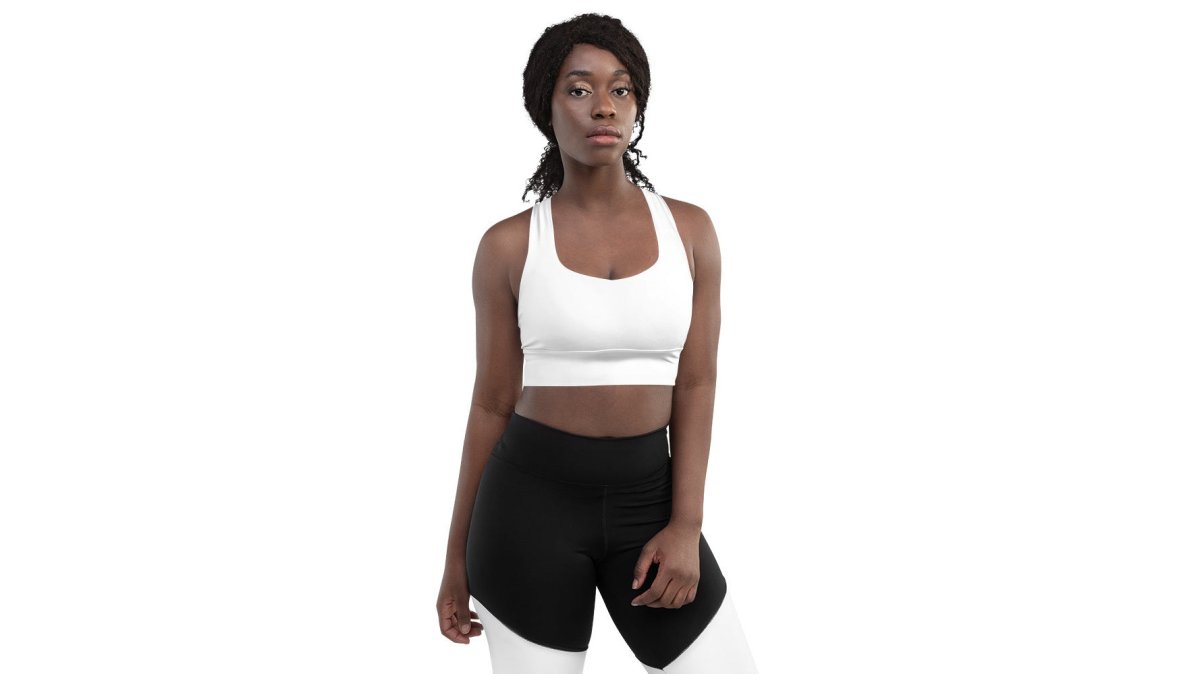
Start with a text-to-image tool and describe the garment you want in plain language, including color, fabric, and style details. The AI generates visual concepts you can refine through design iteration. From there, you can move to pattern making software or a made-to-order platform to turn the digital design into a physical product. Vireous.Shop, for example, lets you generate a design with DALL-E 3 and apply it to apparel like an all-over print sports bra, no pattern maker required.
Does AI clothing design require technical design skills?
Not necessarily. Text-to-image tools and user-friendly online design platforms let you create visual concepts without knowing computer-aided design or pattern making. That said, understanding basic garment construction helps you write better prompts and catch production issues. For simple custom apparel like printed tops or wall art, the workflow is largely automated. For complex cut-and-sew pieces, you may still need a technical designer to create accurate tech packs for manufacturing.
How does AI-generated art translate to physical apparel?
The AI generates a digital design file, which is then mapped onto a garment template using all-over printing or placement printing. The printer receives the file, aligns it to the garment pattern, and produces the item on demand. Fabric simulation tools help predict how the design will drape and stretch before printing. Platforms like Vireous.Shop handle this translation for you, so the preview you approve is what gets printed and shipped.
What are the benefits of using AI in the fashion design process?
AI shortens the design timeline by generating visual concepts in seconds rather than days. It enables digital sampling, which cuts the cost of physical prototypes and reduces material waste. Machine learning also supports trend forecasting and consumer behavior analysis, helping designers make data-backed decisions. For independent creators, AI lowers the barrier to launching a clothing line by handling pattern making and production-ready file preparation on made-to-order platforms.