

Last Updated: October 28, 2026
Quick Summary
The legal requirements for selling AI-generated designs start with copyright: fully machine-generated images generally fall outside U.S. copyright protection, so you must document your human creative contribution. You also need to check each tool's commercial-use license, follow marketplace disclosure rules, and screen designs for trademarks and likeness rights.
- Copyright protects human authorship, so fully machine-generated images generally fall outside protection.
- Save a dated copy of each tool's terms, because terms change and your snapshot is your defense.
- Marketplace AI policies are contracts, and breaching them is a business risk even when your design is lawful.
- Screen every design for logos, slogans, names, and likenesses before it goes live.
- Treat each marketplace's AI policy as a separate compliance layer and review the terms quarterly.
Table of Contents
- Copyright for AI-Generated Art: Who Owns the Output?
- AI Art Commercial Use Rights: Reading the Fine Print
- AI-Generated Designs for Merchandise: Platform Rules and Disclosure
- Trademark Risks in AI-Generated Designs
- Copyright Infringement and Similarity to Existing Works
- A Pre-Publication Compliance Checklist for Sellers
- Turning Legal Confidence Into Custom AI Art With Vireous.Shop
- Frequently Asked Questions
Copyright for AI-Generated Art: Who Owns the Output?
The legal requirements for selling AI-generated designs start with one hard truth: the image generator does not own the picture, but you may not own it either.
Copyright protects original works fixed in a tangible form (Copyright in General (FAQ)). A canvas print counts. A design file counts. What the law protects is human creative expression, not machine output on its own.
Human Authorship and Creative Contribution
The U.S. Copyright Office has been clear that copyright protects human authorship. Fully machine-generated images, produced from a prompt with no further human work, generally fall outside that protection (NewsNet Issue 1060).
- Keep every prompt and revision
- Save dated exports at each stage
- Log your edits in a simple spreadsheet
- Note which elements you added by hand
Copyright Registration and Enforcement
For a step-by-step process to protect your work, see our guide on protecting AI-generated art from theft.
AI Art Commercial Use Rights: Reading the Fine Print
Read the terms for three things: whether paid commercial use is allowed, whether you must credit the platform, and whether output can be used on merchandise.
Tool Licenses and Terms of Service
Check these clauses before you build a product line:
- Commercial use on paid versus free tiers
- Restrictions on print-on-demand and resale
- Attribution or credit requirements
- Rules on using output to train other models
- Termination terms if you stop paying
Save a dated copy of the terms you relied on. Terms change, and your snapshot is your defense. If a license forbids resale, no amount of editing fixes it.
Before building a product line, check each tool's terms for these clauses.
| Clause to check | What to look for |
|---|---|
| Commercial use | Allowed on paid versus free tiers |
| Resale | Restrictions on print-on-demand and resale |
| Attribution | Credit requirements |
| Model training | Rules on using output to train other models |
| Termination | Terms if you stop paying |
AI-Generated Designs for Merchandise: Platform Rules and Disclosure
For anyone selling AI-generated designs, marketplace rules are often stricter than the law, and they are enforced without a courtroom. Print-on-demand services, digital download storefronts, and social commerce platforms each write their own AI policies, and a suspension can wipe out a storefront overnight. The practical rule: the platform's terms are a contract, and breaching them is a business risk even when your design is perfectly lawful.
How the Major Marketplaces Treat AI Designs
- Stock and asset libraries: Many now accept AI submissions only with disclosure and only where the contributor can document the generation process. Some reject AI output entirely.
What Disclosure Actually Requires
Skipping disclosure to look more "handmade" can get a whole storefront suspended, and reinstatement is rarely quick. Build the disclosure into your listing template so you never forget it.
Takedowns and Seller Responsibility
Treat every marketplace's AI policy as a separate compliance layer on top of copyright and trademark law. Review the terms quarterly, keep a dated copy of the version you relied on, and disclose AI use in every listing.
Create Your Own AI-Generated Canvas Art Print-Choose From Six Sizes-Import From →
Trademark Risks in AI-Generated Designs
Trademark risk is where AI sellers get hit hardest, and it is the gap most competitor guides leave open. Copyright protects a specific image. Trademark protects brands, names, logos, and slogans, and it applies even when you drew the element yourself. Generators can reproduce recognizable logos, mascots, and celebrity likenesses because they learned from images that included them. Using that output on merchandise is a trademark problem, not a copyright one.
Trademark: Likelihood of Confusion, Not Copying
Run a check before you publish:
- Search the design for logos, wordmarks, and slogans
- Reverse image search the output for close matches
- Search the USPTO trademark database for key words and phrases
- Avoid celebrity faces and names without a license
- Skip team names, school marks, and character art
- Check whether the mark is registered in the class of goods you sell
Publicity and Personality Rights
A design can be free of copyright problems and still be unlawful because it uses a trademarked logo or a protected likeness. Run the trademark and publicity checks separately from your copyright review.
Practical Screening Workflow
Trademark and publicity rights are the risks copyright review will not catch. Screen every design for logos, slogans, names, and likenesses before it goes live, and keep a dated record of the search.
Copyright Infringement and Similarity to Existing Works
Derivative work rules matter here too. A design that closely tracks a protected image is a derivative, and derivative rights belong to the original owner.
A Pre-Publication Compliance Checklist for Sellers
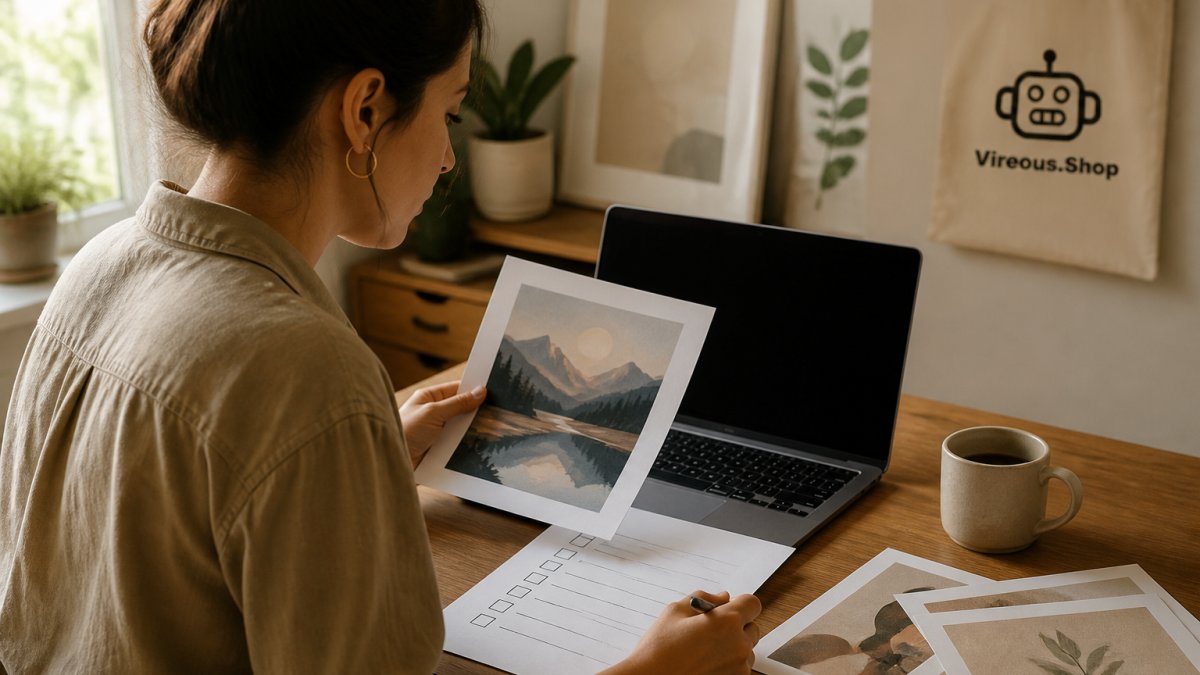
If you plan to sell through print-on-demand, our guide on whether you can really sell AI art on print on demand walks through the licensing side in more depth. Sellers building a catalog should also read up on pricing strategies for AI digital downloads before setting prices, and on how to build a portfolio for AI art licensing if you want to pitch brands.
Turning Legal Confidence Into Custom AI Art With Vireous.Shop
You can generate a design from a text prompt with OpenAI's DALL-E, import it, and order a print in one flow. Our custom AI canvas art print comes in six sizes, with a fade-resistant poly-cotton canvas, hand-stretched over solid wood stretcher bars and ready to hang. We also offer private label options for canvas art, garments, and bags, plus same day or next day dispatch on personalized items.

Frequently Asked Questions
Can you legally sell AI-generated images?
Yes, in most cases you can sell AI-generated images, but two separate permissions matter. First, the AI tool's terms of service must grant commercial use rights for the output. Second, the image must not infringe existing copyrights or trademarks. Selling is generally permitted when the tool allows commercial use and the design is original enough not to copy protected work. Keep records of your prompts and edits, and disclose AI use where a marketplace requires it.
Can AI-generated art be copyrighted in the United States?
The U.S. Copyright Office registers works that contain human authorship. Fully AI-generated images without human creative contribution generally cannot be copyrighted. If you edit, arrange, or substantially modify the output, the human-authored elements may be protectable. For copyright for AI-generated art, document your creative process, including prompt iterations and post-generation edits, so you can show what you contributed if you seek registration or need to enforce rights.
Do I need to disclose that a design was made with AI?
Disclosure depends on the platform. Some marketplaces require sellers to label AI-generated designs for merchandise, while others have no formal rule. Check each platform's seller policy before listing. Even without a rule, disclosure builds trust with buyers and reduces takedown risk. Keep a simple log of the AI image generator used, the prompt, and any human editing, so you can respond quickly if a platform asks how the design was created.
What should I check in an AI tool's commercial-use terms?
Read four things: whether commercial use is allowed, whether you own or license the output, whether the tool claims rights to your generated images, and whether restrictions apply to merchandise or print-on-demand products. Also check indemnification and liability clauses. Save a dated copy of the terms when you generate designs, because AI art commercial use rights can change between versions. If a term is unclear, contact the provider before you sell.
Selling AI art gets simpler when you separate copyright, licensing, and platform rules into three clear checks. That is the workflow we built Vireous.Shop around: generate with OpenAI, keep your records, and order a finished piece without the guesswork. Get started with Vireous.Shop and turn your next prompt into a ready-to-hang canvas.
