

Last Updated: October 22, 2026
Quick Summary
The best clothing items for influencer merchandise are graphic tees, midweight hoodies, and adjustable caps, items with high wear frequency, low size risk, and strong margin headroom. These versatile basics outperform niche pieces in engagement and repeat purchases because followers wear them frequently, making them walking advertisements for your brand.
- Score candidates on five criteria: wear frequency, size risk, climate coverage, print durability, and unit economics headroom.
- Graphic tees, hoodies, and caps form the backbone of nearly every successful influencer merch drop.
- Match apparel to your niche: gaming audiences buy bold graphic tees, fitness audiences buy activewear, fashion audiences buy elevated basics.
- Publish detailed size measurements in inches and include fit notes like 'runs small, size up' to reduce returns.
- Launch with preorders or waitlist signups to validate demand before ordering inventory.
Table of Contents
- Why Clothing Dominates Influencer Merchandise
- Top Influencer Merch Ideas That Sell
- Best YouTuber Merch Apparel Categories
- Print-on-Demand Clothing for Creators
- Merch Design Ideas for Creators
- Testing and Launching Your First Merch Line
- Frequently Asked Questions
Why Clothing Dominates Influencer Merchandise
Clothing is the foundation of any successful influencer merch strategy: a follower in your hoodie becomes a walking advertisement. That's why best clothing items for influencer merchandise consistently outperform other product categories in engagement and repeat purchases.
Apparel is functional and visible: every wear is a chance for others to discover your brand, driving organic reach paid advertising can't replicate.
T-shirts, hoodies, and caps form the backbone of nearly every successful drop.
Top Influencer Merch Ideas That Sell
The best clothing items for influencer merchandise aren't the trendiest pieces, they match your audience's body, climate, budget, and reason for buying.
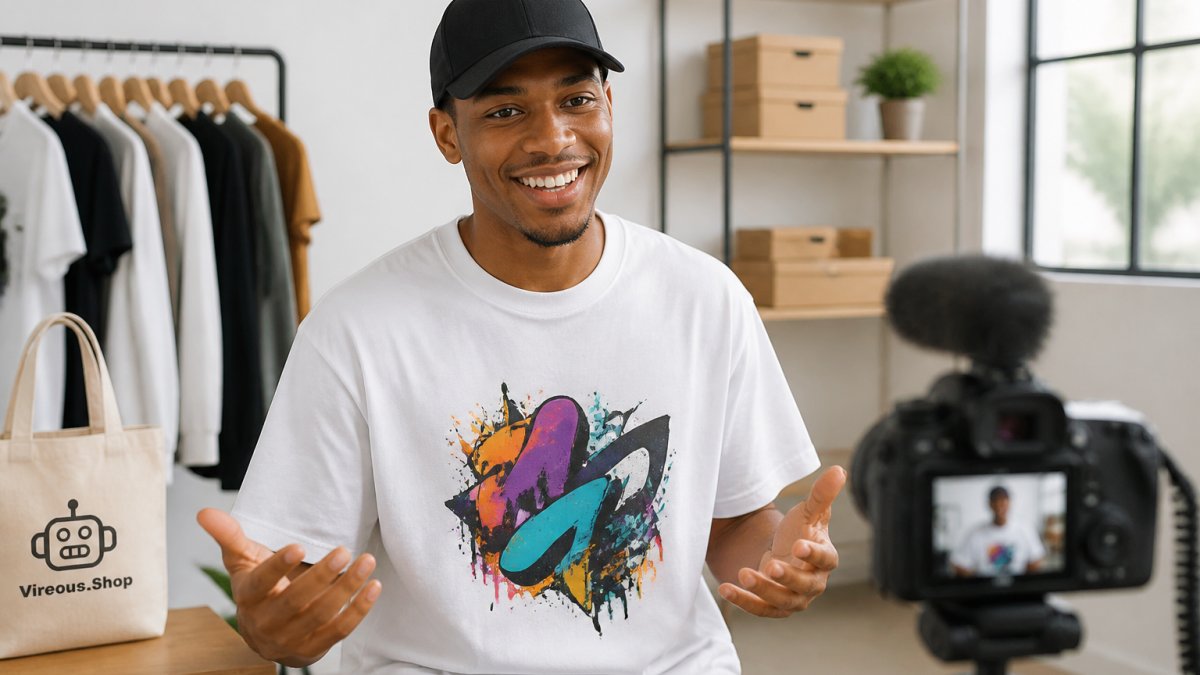
The Five Criteria That Separate Winners From Dead Stock
Score every candidate on five criteria. Items scoring well on at least four outsell items that only look good on a mood board.
- Wear frequency. How many times per week will a typical follower wear it? A heavyweight tee or hoodie gets worn weekly; a statement blazer a few times a year. Higher frequency means more impressions per dollar.
- Size risk. How many sizes and fits must you stock, and how forgiving is the fit? Adjustable caps carry almost no size risk; fitted dresses and tailored blazers carry high risk because returns and unsold sizes eat margin.
- Climate coverage. Does the item work across the regions where your audience lives? A short-sleeve tee stalls in cold markets from November through March; a midweight hoodie covers more of the calendar in most of the country.
- Print and decoration durability. Will the design survive 30+ washes? Screen print on cotton degrades faster than embroidery or dye-sublimation on polyester blends. Durability protects your brand reputation.
- Unit economics headroom. Can you sell at a price your audience accepts while keeping a healthy margin after production, shipping, and platform fees? Thin headroom forces a choice between low margin and high price.
Item-by-Item Shortlist With Selection Notes
Graphic tees. The default first item for most creators: low size risk, high wear frequency, strong print headroom.
Midweight hoodies. The highest-margin core item for most merch lines.
Casual tops and tanks. Summer and gym audiences buy these in volume.

Outerwear and layering pieces. Blazers, cardigans, and lightweight jackets are premium items for fashion-focused or professional niches.
Activewear. Leggings, shorts, and performance tops suit fitness creators.
Match the Item to Your Niche and Audience
The same hoodie that sells out for a gaming creator can sit unsold for a luxury fashion creator. Use this matching logic:
- Gaming and entertainment audiences. Graphic tees, hoodies, and caps. Bold back prints and inside-joke designs convert because the audience buys identity signals.
- Fitness and wellness audiences. Activewear, tanks, and performance tees. Fit and fabric performance matter more than graphic complexity.
- Fashion and lifestyle audiences. Elevated basics, layering pieces, and limited outerwear. Design restraint and fabric quality justify higher prices.
Fabric, Fit, and Sizing Comparisons That Reduce Returns
Quality is the most common complaint in creator merch, and most of it traces back to fabric choice and size accuracy:
- 100% cotton. Soft hand-feel, premium perception, but shrinks and wrinkles more. Best for premium tees where feel is the selling point.
- Cotton-polyester blend. Better shape retention, less shrinking, faster drying, and lower cost. The practical default for hoodies and high-volume tees.
- 100% polyester with moisture-wicking finish. Best for activewear and performance pieces. Holds dye-sublimation prints well but feels less premium in casual wear.
On fit, publish measurements in inches for chest, body length, and sleeve length, and add a plain-language fit note such as "runs small, size up."
Best YouTuber Merch Apparel Categories
YouTubers and video creators have larger, more geographically dispersed audiences, so you need apparel that works across climates and use cases.
Casual Tops and Tanks
Beyond graphic tees, casual tops expand your merch reach: tank tops work for summer and gym audiences, long-sleeve tees appeal to colder regions, and oversized fits attract audiences who prefer comfort.
The Vireous Summer Sleeveless Ribbed Chiffon Camisole Top shows how casual apparel can diversify your lineup.
Casual tops typically have lower price points than hoodies, which means higher volume potential.
Outerwear and Layering Pieces
Blazers, cardigans, and jackets represent premium merch opportunities. These items command higher prices and appeal to audiences who want to make a statement.
The Men's British-Style Blazer and Plaid Blazer from Vireous.Shop illustrate how outerwear can be branded merchandise.
Layering pieces like cardigans work across seasons and body types. The Pink Fashion Open-Front Fuzzy Long Cardigan demonstrates the versatility: warm enough for winter, light enough for spring layering.
Print-on-Demand Clothing for Creators
Print-on-demand (POD) is the fastest way to launch influencer merch without inventory risk. You design, customers order, and production happens only when someone buys.
POD works best for testing designs before committing to bulk production.
Vireous Summer Sleeveless Ribbed Chiffon Camisole Top →
The trade-off is unit cost. POD pricing is higher than bulk manufacturing, which means lower margins or higher customer prices.
Vireous.Shop integrates with advanced design tools that make POD accessible.
Merch Design Ideas for Creators
The design is everything. A mediocre hoodie with an amazing design outsells a premium hoodie with a generic design. Your audience buys the design first, the quality second.
Matching Your Creator Brand Identity
Your merch should feel like a natural extension of your content. A comedy creator's merch should make people smile. A fitness creator's merch should inspire action.
Strong brand identity in merch means consistency: your color palette, typography, and design elements should be recognizable across all pieces, so anyone who sees your merch in public immediately knows who it's from.
The best designs reference your community's shared language.
Sizing, Fit, and Quality Considerations
Sizing determines whether customers actually wear what they buy. Oversized fits are trendy but not universal, so understanding your demographic's fit preferences is crucial.
The Women's Grunge Aesthetic Knitted Top with Spine Design offers sizing guidance that matters.
The Dark in Love Dark Punk Mesh Chain Layered Top demonstrates quality construction. With 95% Cotton and 5% Spandex, it provides stretch.

Testing and Launching Your First Merch Line
Most creator merch failures are demand failures, not design failures. The creators who avoid dead stock treat the first launch as a test, not a bet, here are the low-risk testing mechanics that most merch guides skip.
Step 1: Validate Demand Before You Produce
Do not order inventory based on a poll alone. Use two stronger signals:
- Preorders. Open a preorder window of 7-14 days on your top 2-3 designs. A preorder converts interest into a commitment and tells you exactly how many units to produce. Set a minimum order threshold (for example, 25 units per design) and refund automatically if the threshold is not met.
- Waitlist signups. If preorders feel too heavy for a first test, collect email or SMS signups from a dedicated landing page.
Run both signals against a small paid or organic push so the sample is not limited to your most engaged followers.
Step 2: Order and Wear Samples Yourself
Order one sample per colorway and wash it three times before approving production, checking for shrinkage, print cracking, seam integrity, and color bleed.
Test fit on real bodies across your size range, not just your own. Ask two or three people in different sizes to wear the sample and report fit notes.
Step 3: Launch a Limited Drop, Not a Full Line
A limited drop creates scarcity, limits inventory risk, and gives you clean data. Structure it like this:
- One hero item, two to three designs. Do not launch six categories at once. A single hero item with a few designs produces readable data.
- A fixed window. Keep the drop open for 7-14 days. A deadline drives urgency and gives you a clean cutoff for production.
- A clear unit cap. Announce a maximum unit count per design. When it sells out, you have proof of demand for the next drop.
Use print-on-demand for the first drop if you are uncertain about volume. The per-unit cost is higher, but you carry no inventory risk.
Step 4: Read the Signals That Tell You to Scale
Kill a design when it stalls below half of its unit cap, draws size complaints, or generates returns above a level you can absorb. Killing weak designs early protects cash flow and keeps your store focused on proven winners.
Step 5: Build the Launch Around the Story, Not the Product
Your audience buys into you, not the garment. Announce the drop with the reason you made it: the inside joke, the community moment, or the design story behind each piece. Show the samples on camera, explain the fabric choice, and publish the size guide before launch day.
After the drop closes, collect feedback through a short survey and read every comment.
Frequently Asked Questions
What clothing items work best for influencer merchandise?
T-shirts, hoodies, caps, and tanks are the strongest performers for influencer merchandise because they offer high visibility for your brand, appeal to broad audiences, and work across seasons and demographics. These items provide ample space for custom designs and are affordable enough for followers to purchase impulsively. Layering pieces like cardigans and blazers work well for niche audiences with specific aesthetics.
How do you create effective merch design ideas for creators?
Start by reflecting your creator brand identity into every design, whether that's your catchphrase, logo, color palette, or aesthetic. Keep designs simple enough to recognize at a distance but detailed enough to stand out. Test designs with a small audience first before committing to bulk orders. Consider what your followers actually wear and what occasions they wear it for, then design accordingly.
Is print-on-demand clothing for creators cost-effective?
Yes, print-on-demand eliminates inventory risk by producing items only when ordered. You avoid upfront manufacturing costs and storage fees. This approach works especially well for creators testing new designs or launching their first merch line. However, per-unit costs are higher than bulk orders, so pricing must reflect this. As your audience grows, you can transition to bulk manufacturing for better margins.
What makes the best YouTuber merch that audiences actually buy?
The best YouTuber merch reflects the creator's personality and resonates with their community. Items should feel authentic to the channel's content and aesthetic. Quality matters, followers expect merchandise to be durable and well-made. Pricing should feel fair relative to quality. Exclusivity also drives sales; limited drops and seasonal collections create urgency and encourage purchase intent.
