

Table of Contents
- What Makes Personalized Products Different
- Personalized vs. Customized Products: Key Differences
- Why Personalized Products Command Higher Prices
- The Real Benefits of Customized Products
- How to Design Custom Apparel That Holds Its Value
- When Personalization Actually Pays Off
- Common Mistakes That Make Personalized Products Not Worth It
- Conclusion
What Makes Personalized Products Different
Personalized products reflect individual identity rather than mass-market conformity. A custom piece with your chosen design becomes a conversation starter in ways generic alternatives rarely do. This emotional connection is where the real value emerges. At Vireous.Shop, creators and trendsetters gravitate toward personalization because it amplifies their individual brand, whether building merchandise for an audience or curating wall art that matches a specific interior vision.
The cost difference is real. Personalized products typically cost more than mass-produced equivalents due to production complexity, smaller batch sizes, and made-to-order workflows. The question isn't whether they cost more, but whether that premium reflects genuine value for your use case.
Personalized vs. Customized Products: Key Differences
Personalized products are pre-designed items tailored to you with limited modifications, your name, a date, or a simple photo. Customized products give you complete creative control to design from scratch using your own artwork, text, or AI-generated imagery.
Personalization works well for gifts and straightforward use cases. You pick a template, add a name or photo, and order within minutes. Customization requires you to have a vision or develop one. You might use design tools, AI art generators, or upload your own graphics. This takes longer but produces something genuinely one-of-a-kind.
Vireous.Shop offers both straightforward personalization and AI-powered custom design generation through DALL-E 3 integration, letting you describe what you want in natural language and have artwork generated instantly. Customization also changes how you relate to the final product, when you've invested time designing something, you're psychologically more invested in keeping it.

| Aspect | Personalized Products | Customized Products |
|---|---|---|
| Design Effort | Minimal (template-based) | Significant (full creative control) |
| Time to Order | 5-10 minutes | 15-45 minutes |
| Uniqueness Level | Limited (many similar variations) | High (truly one-of-a-kind) |
| Best For | Gifts, quick orders | Brand building, artistic expression |
| Emotional Investment | Moderate (gift recipient) | High (designer/creator) |
Why Personalized Products Command Higher Prices
The price premium reflects real production factors. Mass production achieves economies of scale; a factory producing 10,000 identical t-shirts spreads fixed costs across massive volume. Personalized products are made-to-order, meaning each item is produced individually or in tiny batches, eliminating bulk discounts.
Setup costs matter too. A standard print run requires one-time setup per design. Personalized orders require setup for each unique variation, or use more expensive on-demand printing technology that handles variation automatically. Quality materials and processes also drive cost, many personalized product providers use fade-resistant printing, premium fabrics, and hand-finished details that mass-market retailers skip. Vireous.Shop's canvas prints use fade-resistant, acid-free poly-cotton blend with hand-stretched wooden frames.
Faster turnaround adds cost. Same-day or next-day dispatch requires local fulfillment infrastructure, expedited printing, and premium logistics. The perceived value often exceeds the actual cost premium, a custom item received tomorrow feels worth more than a generic item arriving in three weeks.
The Real Benefits of Customized Products
The most obvious benefit is uniqueness. You own something nobody else has. For creators building personal brands, this matters enormously. A content creator wearing mass-market apparel blends in; custom-branded merchandise stands out and reinforces brand identity.
Customized products also solve the "nothing fits my taste" problem. Standard retail offers limited options within narrow aesthetic ranges. Customization eliminates that friction, you specify exactly what you want, and it gets made.
Research on the "endowment effect" shows people value items more highly when they've invested effort in creating or selecting them (peer-reviewed research). A customized item feels like an extension of yourself, driving retention because it feels irreplaceable. For gift-givers, customization demonstrates thoughtfulness, a custom canvas print with shared memories shows genuine effort.
How to Design Custom Apparel That Holds Its Value
Start by understanding your target audience. Research the market first, identify an emerging need, and design to fill it. This backwards approach dramatically increases the likelihood your custom apparel will resonate.
Keep your initial product assortment narrow. Pick one category and master it.
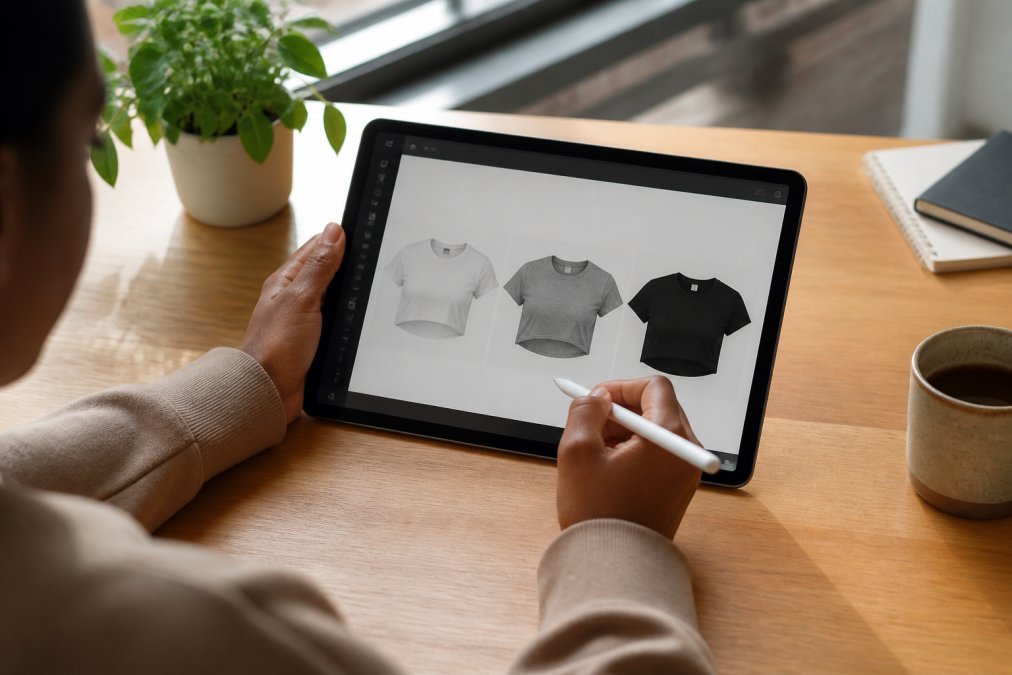
Design quality matters more than quantity. A single exceptional design drives more sales and repeat purchases than five mediocre designs. Test designs with your target audience before committing to production. Vireous.Shop's design tools let you iterate quickly, generate AI artwork from text prompts, adjust designs instantly, and preview mockups before ordering.
Production quality directly impacts perceived value. Premium printing lasts years; cheap printing fades within months (the FDA). Premium fabric maintains integrity through dozens of washes (astm.org). Consistency in branding amplifies value, ensure your designs reflect a coherent aesthetic so customers recognize your items.
When Personalization Actually Pays Off
Personalization delivers real value in specific scenarios. Gifts are the clearest use case, a personalized mug with someone's name signals thoughtfulness without requiring significant design effort. Brand building is another clear win. If you're a content creator or small business owner, custom merchandise reinforces brand identity and generates marketing value.
Interior design is a strong use case too. If you want wall art matching a specific room's color scheme, mass-market options rarely fit perfectly. A custom canvas print solves this elegantly, you get exactly what you want instead of settling for the closest available option.
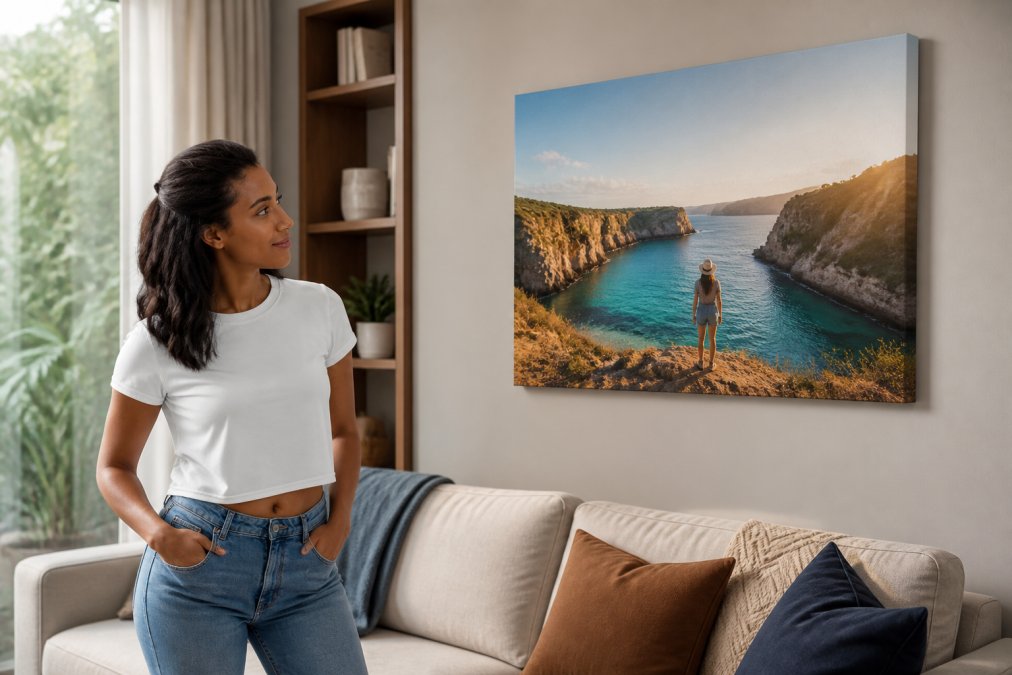
Personalization doesn't pay off when you're chasing novelty without purpose. Ordering a personalized item just because you can wastes money if the item sits unused. Personalization also underperforms when quality is poor, a low-quality personalized item is worse than a high-quality generic item because you're paying extra specifically for customization.
Common Mistakes That Make Personalized Products Not Worth It
The first mistake is assuming personalization alone creates value. Customization is a feature, not a benefit. The benefit is solving a specific problem, creating a unique gift, or matching your aesthetic. If personalization doesn't solve a real problem, it's just an expensive add-on.
Many people overspend on personalized items they'll rarely use. Before personalizing, ask honestly: Will I actually use this regularly? Will this solve a real problem?
Underestimating design difficulty is another common trap. A poorly designed custom item looks worse than a well-designed generic item. If you lack design skills, use AI-powered design tools like those at Vireous.Shop that generate artwork from text descriptions.
Choosing the wrong product category for customization wastes money. Custom wall art is excellent, you display it constantly and want it to match your aesthetic. Custom socks are questionable since you wear them hidden. Think through how visible and durable your item choice is before personalizing.
Ignoring quality specifications is critical. Review material specifications, printing methods, and durability before ordering. Many people also fail to consider production timelines, rush personalization costs significantly more. Planning ahead and ordering during normal production windows saves money.
Conclusion
Personalized products are worth it when they solve a specific problem: creating a unique gift, building brand identity, or acquiring something matching your exact aesthetic. The value isn't in the customization itself, it's in what the customization enables.
They're not worth it when you're paying for novelty without purpose, when quality is compromised, or when the item won't actually get used. The price premium only makes sense if you're getting something genuinely better than the alternative.
The real question isn't whether personalized products are worth it in general. It's whether personalized products are worth it for your specific use case. If you're building a brand, creating a meaningful gift, or solving an aesthetic problem, customization delivers clear value. Vireous.Shop makes this easier with same-day or next-day dispatch, AI-powered design generation through DALL-E 3 integration, and a Money Back Guarantee, removing the risk from personalization. Customize your vision and see how personalization transforms your creative expression into tangible reality.
Frequently Asked Questions
What are the benefits of customized products?
Customized products deliver emotional value, uniqueness, and brand differentiation that mass-produced items cannot match. They increase customer loyalty through personal connection, and command higher profit margins for sellers. Custom apparel and wall art also create stronger user engagement and repeat purchases, especially for creators building personal brands or influencers developing merchandise for followers.
Why do personalized products cost more than mass-produced items?
Personalized products involve on-demand production, custom design work, smaller batch sizes, and specialized fulfillment. Unlike mass production with economies of scale, each order requires individual attention. Production costs remain high because inventory cannot be pre-manufactured, and design customization adds labor. Platforms offering same-day or next-day dispatch for personalized items incur additional logistics costs. Buyers pay for the convenience, uniqueness, and quality control that individualization demands.
Are personalized gifts worth the extra cost?
Personalized gifts justify their higher price when emotional impact matters more than cost. Custom items create lasting perceived value. For occasions like anniversaries, milestones, or brand-building (such as influencer merchandise), personalization transforms a generic gift into a keepsake. However, for casual, low-stakes gifting, mass-produced alternatives may deliver sufficient value at lower cost.
How does AI technology change the value of personalized apparel?
AI-powered design tools like DALL-E integration lower the barrier to creating unique apparel by allowing users to generate designs from text prompts rather than hiring designers. This democratizes custom apparel creation, making personalization more accessible and affordable for small creators and individuals. AI also accelerates design iteration and enables scalability for influencers or content creators building merchandise lines, improving the return on investment for personalized products compared to traditional custom production methods.
This article was written using GrandRanker